


Understanding vertical-specific AI solutions
In the rapidly evolving world of artificial intelligence, we’re witnessing a significant shift from general-purpose AI models to highly specialized, ‘vertical-specific’ solutions. While general AI aims to perform a wide range of tasks across various domains, vertical AI dives deep into a particular industry or niche, solving highly specific problems with unparalleled precision and efficiency. Think of it as moving from a Swiss Army knife to a surgeon’s scalpel – each designed for a distinct purpose, excelling in its specialized role.

This trend is driven by the increasing complexity of real-world business challenges and the demand for AI that can deliver immediate, tangible value within specific operational contexts. For businesses, this means AI that truly understands their unique data, regulations, and workflows, rather than requiring extensive customization of a broad model.
General vs. vertical AI: a crucial distinction
To truly appreciate the power of vertical AI, it’s important to understand how it differs from its more generalized counterparts. General AI models, like large language models (LLMs) or broad image recognition systems, are trained on vast, diverse datasets to perform a wide array of tasks. They are versatile and powerful, but often lack the deep contextual understanding required for highly specialized applications.

Vertical AI, on the other hand, is purpose-built. It’s trained on domain-specific datasets, incorporating industry jargon, regulatory compliance, and unique operational nuances from the ground up. This focused approach allows vertical AI to:
- Achieve higher accuracy: By understanding the specific context and data patterns of an industry.
- Operate with greater efficiency: Streamlining processes that general AI might struggle to grasp without extensive fine-tuning.
- Ensure compliance: Adhering to industry-specific regulations and standards from its core design.
Real-world impact: vertical AI across industries
The practical applications of vertical-specific AI are already transforming numerous sectors. Let’s explore a few examples:
Healthcare: precision and personalized care
In healthcare, vertical AI is being used for everything from accelerating drug discovery to enhancing diagnostic accuracy. Imagine AI systems trained exclusively on medical images, patient records, and genomic data, capable of identifying subtle disease markers that might elude the human eye or sifting through millions of research papers to find novel treatment pathways.

- Drug discovery: Identifying potential drug candidates and predicting their efficacy with greater speed.
- Personalized medicine: Tailoring treatment plans based on individual patient genetics and health data.
- Diagnostic imaging: Assisting radiologists in detecting anomalies in X-rays, MRIs, and CT scans.
Finance: enhancing security and insights
The financial sector benefits immensely from AI solutions designed to understand complex market dynamics, detect fraud, and manage risk. These systems are trained on vast amounts of transactional data, market trends, and regulatory frameworks.

- Fraud detection: Identifying suspicious transactions in real-time with high accuracy, minimizing financial losses.
- Algorithmic trading: Executing trades based on sophisticated market analysis and predictive models.
- Personalized financial advice: Offering tailored investment recommendations based on individual risk profiles and goals.
Manufacturing: optimizing operations and quality
For manufacturers, vertical AI is a game-changer for predictive maintenance, quality control, and supply chain optimization. These AI systems learn from sensor data, production logs, and historical performance to prevent costly downtime and improve product quality.
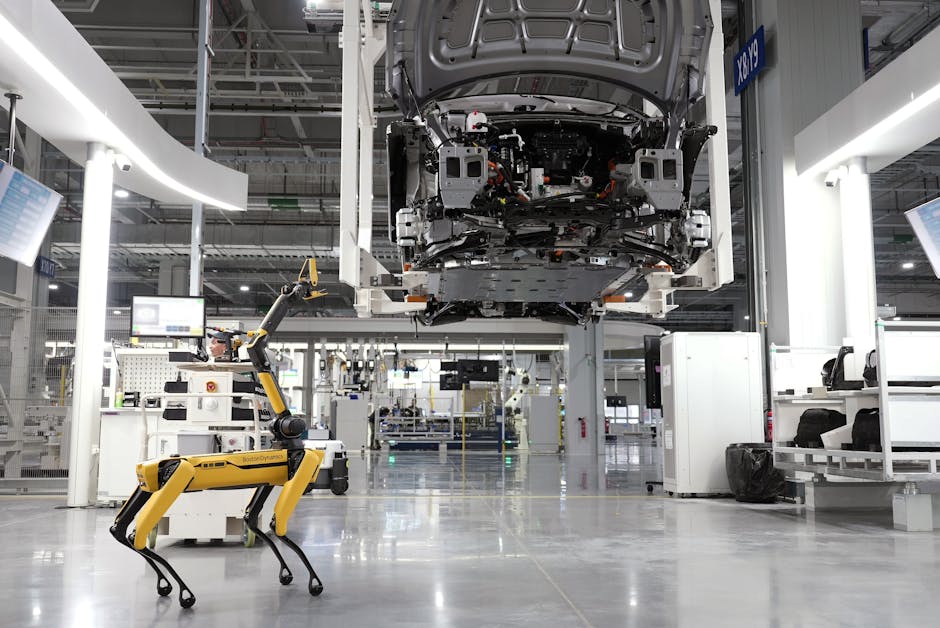
- Predictive maintenance: Anticipating equipment failures before they occur, reducing unplanned downtime.
- Quality control: Automatically inspecting products for defects with computer vision, ensuring consistent quality.
- Supply chain optimization: Forecasting demand and managing inventory more efficiently.
Retail: elevating customer experience and efficiency
In retail, vertical AI helps businesses understand customer behavior, optimize inventory, and personalize shopping experiences. These solutions are trained on sales data, customer interactions, and product information.

- Inventory management: Predicting demand for specific products to prevent stockouts or overstock.
- Personalized recommendations: Offering products and promotions tailored to individual customer preferences.
- Customer service chatbots: Providing instant, accurate support for common queries related to specific products or services.
The strategic advantage of embracing vertical AI
For businesses looking to gain a competitive edge, adopting vertical-specific AI is becoming less of an option and more of a necessity. The benefits extend beyond mere efficiency gains:
- Unmatched precision: Solving industry-specific problems with a level of accuracy general AI cannot match.
- Faster time to value: Solutions are often quicker to implement and integrate, as they are designed for existing workflows.
- Enhanced compliance and security: Built with industry regulations and data security in mind from the outset.
- Competitive differentiation: Leveraging specialized AI can unlock unique insights and capabilities that set a business apart.

Navigating the landscape of specialized AI
As vertical AI continues to mature, businesses must strategically evaluate how to integrate these powerful tools. Key considerations include:
- Identifying pain points: Pinpointing specific, high-value problems within your industry that AI can solve.
- Data readiness: Ensuring access to clean, relevant, and domain-specific data for training and deployment.
- Vendor selection: Partnering with AI providers who deeply understand your industry and offer tailored solutions.
- Scalability and integration: Choosing solutions that can grow with your business and integrate seamlessly with existing systems.

A practical path forward for innovation
The rise of vertical-specific AI solutions marks a pivotal moment in the technological landscape. It signifies a move towards more intelligent, context-aware, and impactful AI that truly understands the nuances of individual industries. For organizations, this isn’t just about adopting new technology; it’s about embracing a strategic approach to problem-solving that leverages deep domain expertise combined with cutting-edge AI capabilities. By focusing on these specialized applications, businesses can unlock unprecedented levels of efficiency, innovation, and competitive advantage, shaping a future where AI is not just smart, but truly wise in its specific domain.





1 Comment