
The AI revolution: A partnership, not a takeover
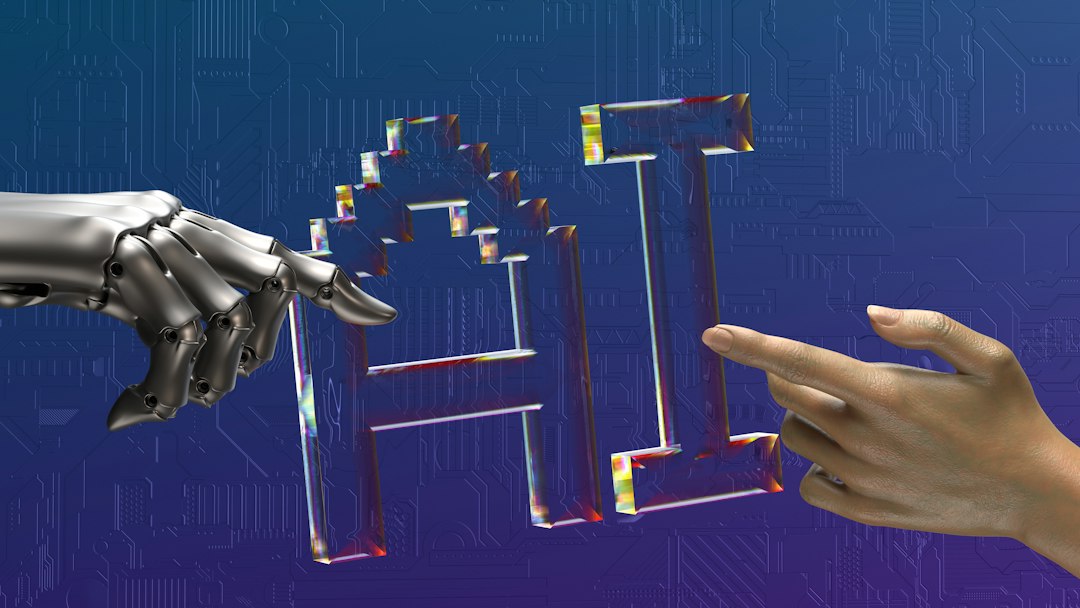
The rise of artificial intelligence often sparks fears of job displacement and human obsolescence. However, at TechDecoded, we believe in a different narrative: AI as a powerful assistant, designed to enhance—not replace—our unique human skills. Far from being a threat, AI offers unusual opportunities to augment our intelligence, creativity, and productivity, allowing us to focus on what truly matters.
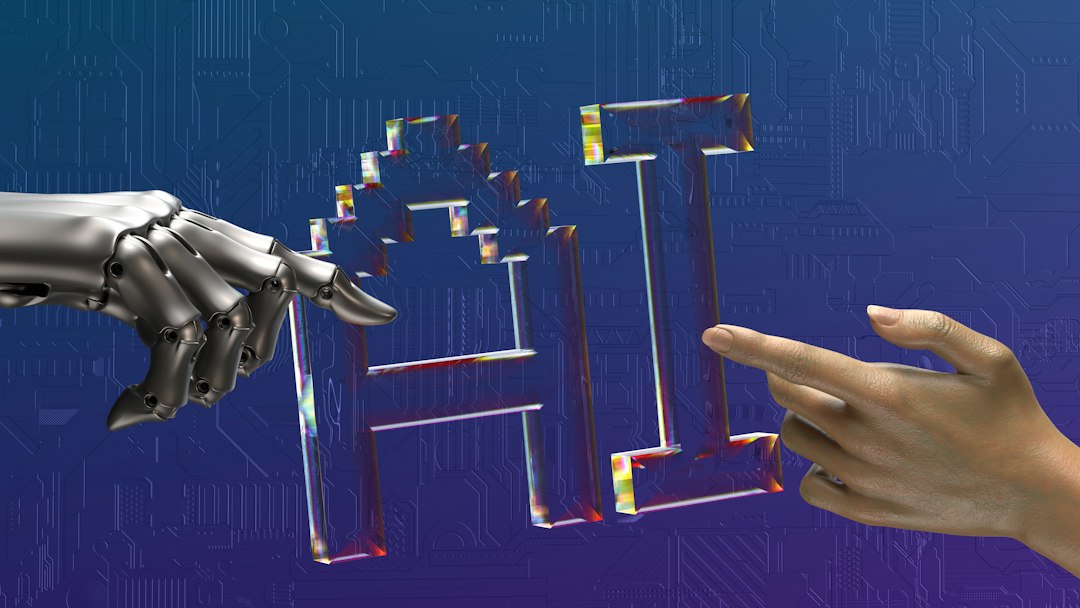
This article explores how modern AI tools are transforming various sectors by working alongside humans, making us more efficient, innovative, and capable. It’s about leveraging technology to make use of new levels of human potential.
Boosting productivity and efficiency with AI assistance
One of AI’s most immediate impacts is its ability to automate repetitive, time-consuming tasks, freeing up human workers for more complex and strategic activities. Imagine offloading mundane data entry or scheduling, allowing you to dedicate more energy to problem-solving or client engagement.
- Automated data analysis: AI can sift through vast datasets in seconds, identifying patterns and insights that would take humans days or weeks. This doesn’t replace analysts but empowers them with faster, deeper understanding.
- Smart administrative support: Tools can manage calendars, draft emails, and summarize meetings, acting as a highly efficient personal assistant.
- Streamlined content creation: AI can generate initial drafts for reports, marketing copy, or code, providing a strong foundation for human refinement and creative input.
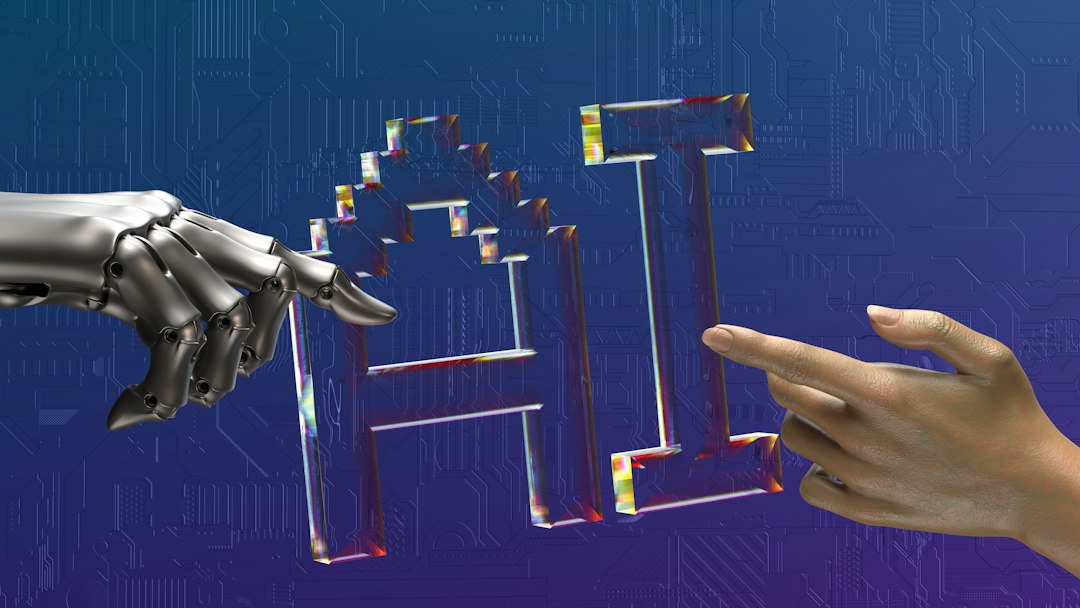
By taking on the heavy lifting of routine operations, AI allows professionals to elevate their roles, focusing on critical thinking, creativity, and interpersonal skills.
Enhancing creativity and innovation
Many believe creativity is an exclusively human domain, yet AI is proving to be an incredible catalyst for innovative thought. It doesn’t create in the human sense, but it provides tools that expand our creative horizons.
- Brainstorming and idea generation: AI can generate diverse ideas, concepts, or design variations based on prompts, helping artists, designers, and writers overcome creative blocks.
- Personalized learning and skill development: AI-powered platforms can tailor educational content to individual learning styles and paces, helping humans acquire new skills faster and more effectively.
- Design and prototyping acceleration: From architectural layouts to product designs, AI can rapidly generate and iterate on prototypes, allowing human designers to explore more options and refine their vision with unusual speed.
This partnership allows humans to push boundaries, experiment more freely, and bring novel ideas to fruition faster than ever before.
Expanding human capabilities and accessibility
AI’s ability to process information and interact in diverse ways also serves to expand fundamental human capabilities and make the world more accessible.
- Language translation and communication: Real-time translation breaks down language barriers, fostering global collaboration and understanding.
- Accessibility tools: AI-driven solutions can assist individuals with disabilities, from text-to-speech for the visually impaired to predictive text for those with motor difficulties, enhancing their ability to interact with technology and the world.
- Medical diagnostics and research: AI assists doctors in analyzing medical images and patient data, leading to earlier and more accurate diagnoses, augmenting human expertise in critical fields.

In these scenarios, AI acts as an equalizer, empowering individuals and extending the reach of human potential across various domains.
Comparing AI assistant tools
The landscape of AI assistant tools is rapidly expanding, offering specialized assistance across various domains. Understanding their core strengths and limitations is crucial for effectively integrating them into your workflow and truly enhancing human capabilities.
| Tool | Where it helps | Key limitation | When to choose it |
|---|---|---|---|
| ChatGPT / Google Gemini | Brainstorming, drafting text, summarizing information, generating ideas, basic coding snippets, answering complex questions. | Can “hallucinate” (produce factually incorrect information), lacks real-time access to proprietary data unless integrated, may reflect biases present in training data. | For initial content generation, exploring concepts, rapid information synthesis, or overcoming creative blocks in writing and ideation. |
| GitHub Copilot | Accelerating software development by suggesting code, completing functions, generating tests, and explaining code snippets. | Suggestions may not always be optimal or secure, requires human oversight for correctness and best practices, can sometimes generate repetitive code. | When a developer needs to speed up coding, explore different implementations, or work with unfamiliar libraries and frameworks. |
| Grammarly | Enhancing writing clarity, correctness, engagement, and delivery across various platforms, identifying grammatical errors and stylistic improvements. | Primarily focused on language mechanics and style, less effective for deep content generation or complex factual verification, may not fully grasp nuanced context. | For refining written communication, ensuring professional tone, improving readability, and catching errors in emails, reports, and documents. |
| Midjourney / DALL-E | Generating unique images from text prompts, exploring visual concepts, creating artistic assets, and visualizing ideas quickly. | Output can be unpredictable and require multiple iterations, ethical considerations around generated content, limited control over fine details without advanced prompting. | When a designer or content creator needs rapid visual prototyping, unique imagery for marketing, or inspiration for artistic projects. |
Cultivating the human-AI partnership: A worked example
To truly grasp the power of AI as a assistant, consider a common scenario: a marketing manager tasked with launching a new product. Traditionally, this involves extensive research, content creation, and strategic planning, often leading to bottlenecks and missed opportunities. With AI, the process transforms into a dynamic collaboration.
Imagine the manager needs to develop a compelling launch campaign for a new eco-friendly smart home device. Instead of starting from scratch, they first turn to an AI language model. The manager prompts the AI: “Generate five unique taglines for an eco-friendly smart home device targeting millennials, focusing on convenience and sustainability.” The AI quickly provides several options, some of which are intriguing, others less so. The manager reviews these, selecting a few strong contenders and refining them with their unique understanding of the brand’s voice and target audience’s specific cultural nuances. This initial brainstorming phase, which might have taken hours of solo ideation, is condensed into minutes, allowing the manager to focus on qualitative assessment rather than raw generation.
Next, the manager needs to draft a blog post introducing the product. They feed the AI the chosen tagline, key product features, and target audience demographics. The AI generates a first draft, outlining sections on benefits, technology, and impact. While the AI’s draft is coherent, it lacks the emotional resonance and persuasive storytelling that only a human can provide. The manager then takes this foundation, injecting personal anecdotes, strengthening the call to action, and ensuring the tone aligns perfectly with the brand’s identity. They might even ask the AI to suggest alternative phrasing for a particularly tricky sentence, leveraging its linguistic prowess to enhance their own writing.
Finally, the manager needs to visualize the product in use for social media. Using an AI image generator, they input prompts like “a millennial couple enjoying a smart, sustainable home, with natural light and modern decor.” The AI produces several image concepts. The manager selects the most promising ones, perhaps requesting minor adjustments to color palettes or composition, guiding the AI towards the perfect visual representation. This iterative process allows for rapid prototyping of visual assets, freeing up the manager from the time-consuming task of sourcing or creating every image from scratch, and instead focusing on the creative direction and brand alignment.
In this example, the AI doesn’t replace the marketing manager. Instead, it acts as an incredibly efficient assistant, handling the initial heavy lifting of generation and iteration. This allows the human manager to dedicate their cognitive energy to higher-order tasks: strategic decision-making, creative refinement, emotional connection, and ensuring brand consistency – skills that remain uniquely human and are amplified, not diminished, by AI’s presence.
A practical path forward with AI
The future isn’t about humans competing with AI; it’s about humans collaborating with AI. Embracing AI as an enhancement tool requires a shift in mindset and a willingness to learn new ways of working. Organizations and individuals who proactively integrate AI into their workflows will be better positioned to innovate, adapt, and thrive in an increasingly tech-driven world.
By understanding AI’s strengths and focusing on developing uniquely human skills—like critical thinking, emotional intelligence, strategic planning, and ethical reasoning—we can ensure a future where technology serves humanity, making us all more capable and effective.



2 Comments