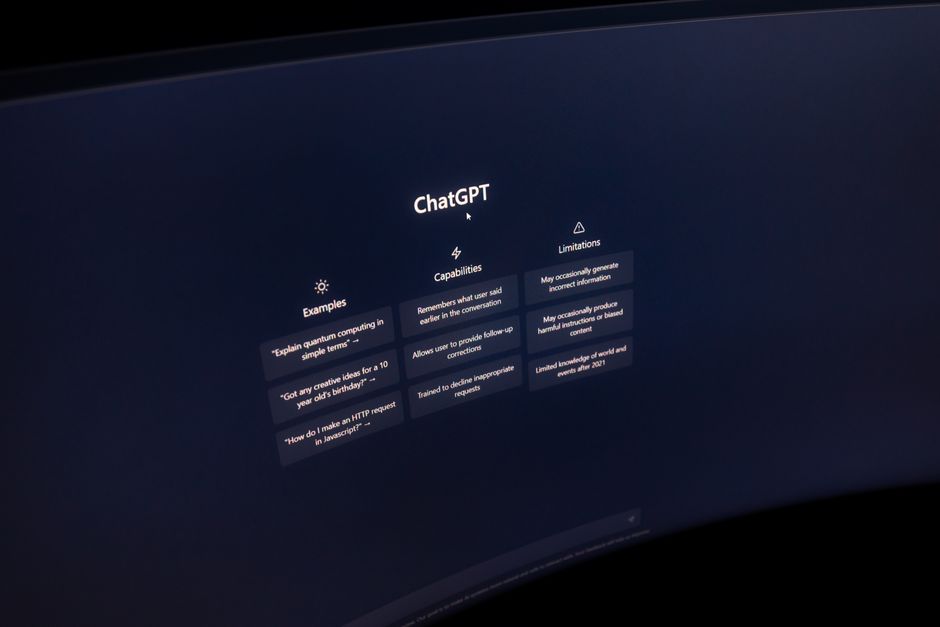

While both companion chatbots, such as Character AI, and work assistants, like ChatGPT, leverage large language models (LLMs) to generate human-like text, their fundamental design, training objectives, and intended use cases diverge significantly. Companion chatbots are engineered for engaging, personalized, and often role-playing interactions, prioritizing personality, emotional connection, and long-term conversational memory. In contrast, work assistants are optimized for productivity, factual accuracy, task completion, and information retrieval, aiming to be efficient tools for professional or academic tasks.
Core purpose and design philosophy
The primary distinction between these AI categories lies in their core purpose. Companion chatbots are built to simulate personalities and foster engaging, often open-ended conversations. Their design emphasizes maintaining a consistent persona, adapting to user preferences over time, and generating creative, emotionally resonant responses. This often involves fine-tuning on datasets rich in dialogue, fictional narratives, and character-driven content, with a focus on conversational flow and user retention rather than strict factual correctness. The goal is to create an immersive and interactive experience, where the AI's "personality" is a central feature.

Work assistants, on the other hand, are designed as utility tools. Their purpose is to help users accomplish specific tasks, generate factual information, draft content, summarize documents, or assist with coding. Their underlying models are typically trained on vast and diverse datasets encompassing text from the internet, books, code repositories, and academic papers, with a strong emphasis on factual knowledge and logical reasoning. The design prioritizes accuracy, coherence, and the ability to follow complex instructions, often incorporating mechanisms like retrieval-augmented generation (RAG) to access and synthesize external information. For these tools, a neutral, objective tone is often preferred, and "personality" is secondary to utility.
Choosing the right AI for your needs
Selecting between a companion chatbot and a work assistant hinges entirely on your objective. This table outlines common scenarios and the best-suited tools, highlighting their strengths and inherent limitations.
| Tool | Where it helps | Key limitation | When to choose it |
|---|---|---|---|
| Character AI (e.g., specific character bots) | Role-playing, creative writing prompts, emotional support, exploring fictional scenarios, long-term conversational engagement. | Factual inaccuracies, can "hallucinate" details, not designed for productivity tasks, may struggle with complex logical reasoning. | For entertainment, creative exploration, or when seeking a personalized, engaging conversational partner with a distinct persona. |
| ChatGPT (or similar general-purpose assistants) | Drafting emails, summarizing documents, brainstorming ideas, coding assistance, factual information retrieval, language translation, structured problem-solving. | Lacks a consistent personality, can be overly formal, may not offer deep emotional engagement, can still generate plausible but incorrect information. | For professional tasks, academic support, information synthesis, or when you need a versatile tool to boost productivity and assist with complex cognitive tasks. |
| Replika | Personal journaling, mood tracking, emotional companionship, self-reflection, light conversational therapy. | Limited utility for factual queries or complex work tasks, responses can sometimes feel generic or repetitive, privacy concerns with personal data. | When seeking a private, supportive space for emotional processing, self-improvement, or a consistent digital companion focused on well-being. |
| Google Gemini (Advanced) | Advanced data analysis, complex coding, multimodal input processing (images, video), sophisticated research, generating diverse creative content. | Can be resource-intensive, may require specific prompting techniques for optimal results, still subject to occasional factual errors or biases present in training data. | For modern research, highly technical tasks, or when leveraging multimodal capabilities and requiring a powerful, versatile assistant for advanced problem-solving. |
Navigating the "personality" of AI: A decision framework
The core distinction between companion chatbots and work assistants often boils down to their designed "personality" or lack thereof. While work assistants like ChatGPT are often described as having a neutral, helpful, and objective persona, this is a carefully engineered outcome. Their training and fine-tuning prioritize factual accuracy, adherence to instructions, and the avoidance of controversial or biased statements. This neutrality is a feature, not a bug, ensuring they remain versatile tools for a wide array of professional and academic tasks. When you ask ChatGPT to draft an email, you expect a professional tone, not a witty retort or an emotional confession. Its responses are shaped to be informative and task-oriented, minimizing any idiosyncratic traits that might distract from its utility. Understanding how temperature and top-p shape LLM responses can further illuminate how these tools are fine-tuned to either be more creative and varied (like a companion) or more focused and deterministic (like a work assistant).
Companion chatbots, conversely, embrace and often exaggerate personality. Their entire purpose is to embody a character, whether it’s a fictional hero, a historical figure, or a supportive friend. This means their responses are intentionally colored by specific traits, emotional registers, and conversational styles. They might use slang, express opinions, or even engage in playful banter, all in service of maintaining their persona. For instance, a companion bot designed as a medieval knight would likely speak in an archaic style and frame situations in terms of honor and quests, even if the user’s query is mundane. This deliberate injection of personality is what makes them engaging for role-playing, creative exploration, or simply for companionship. However, this also means they are inherently less reliable for factual information or tasks requiring strict objectivity. Their "memory" of past interactions is often crucial for maintaining this consistent persona, allowing them to build a sense of continuity in conversations that work assistants typically do not prioritize beyond the immediate context window.
When deciding which type of AI to engage with, consider the primary goal. If you need a tool to generate code, summarize a report, or brainstorm business ideas, a work assistant is the clear choice. Its design is optimized for efficiency, accuracy, and task completion. If, however, you are looking for a creative partner, a character to interact with, or a digital entity to explore emotional or fictional scenarios, a companion chatbot will provide a far richer and more engaging experience. Attempting to use a companion bot for critical work tasks will likely lead to frustration due to its inherent biases towards persona maintenance over factual rigor. Conversely, expecting deep emotional engagement or role-playing from a work assistant will leave you feeling cold and unfulfilled. The key is to align your expectations with the AI’s fundamental design and purpose, recognizing that each category excels in its specialized domain. This distinction is vital for leveraging the full potential of these diverse AI applications, much like understanding what AI agents can actually do without human help informs their practical deployment.
Training data and behavioral shaping
The divergent goals of companion and work-oriented chatbots lead to distinct approaches in their training and behavioral shaping. Companion chatbots often undergo specialized fine-tuning to imbue them with specific character traits, conversational styles, and memory capabilities relevant to their simulated persona. This can involve training on curated datasets of fictional dialogues, role-playing scenarios, or even user-generated content that helps reinforce a particular character's voice and emotional range. The models are often optimized to "remember" past interactions and preferences, creating a sense of continuity and personalization over extended conversations. This focus on long-term engagement means they might prioritize creative or emotionally appropriate responses over strict adherence to external facts, especially if those facts contradict the established character.
Work assistants, conversely, are rigorously trained and fine-tuned to maximize their utility for practical applications. Their training emphasizes factual correctness, logical consistency, and the ability to execute precise instructions. This often involves extensive pre-training on massive text and code corpora, followed by supervised fine-tuning and reinforcement learning from human feedback (RLHF) that rewards helpful, harmless, and honest outputs. The objective is to minimize




Leave a Comment