


The invisible barrier: Why AI often misses the point
Artificial intelligence has achieved incredible feats, from generating human-like text to powering self-driving cars. Yet, despite these advancements, there’s a persistent challenge that often makes AI seem, well, a bit clueless: context. It’s like talking to someone who understands every word you say literally, but completely misses the underlying meaning, the sarcasm, or the unspoken implications. For AI to truly integrate into our lives seamlessly, understanding why it struggles with context is crucial.

At TechDecoded, we believe in breaking down complex tech. Today, we’re diving into the fundamental reasons why context remains one of AI’s biggest hurdles and what that means for its future.
What exactly is context, anyway?
For humans, context is everything. It’s the background information, the situation, the tone of voice, the non-verbal cues, and our shared understanding of the world that allows us to interpret meaning far beyond the literal words spoken or written. If someone says, “It’s raining cats and dogs,” we don’t picture animals falling from the sky; we understand it means heavy rain, thanks to our contextual knowledge.

Context helps us disambiguate meaning, infer intent, and navigate social interactions. It’s an intuitive, often subconscious process that AI finds incredibly difficult to replicate.
The literal nature of AI processing
Modern AI, particularly large language models (LLMs), operates on patterns and statistical relationships within vast datasets. When an AI processes text, it’s essentially predicting the most probable next word or sequence of words based on what it has learned. It doesn’t “understand” in the human sense; it doesn’t have beliefs, intentions, or a subjective experience of the world.

This literal approach means that if a word or phrase has multiple meanings, AI will often default to the most statistically frequent one, even if it’s contextually incorrect for a specific situation. It lacks the ability to reason about the underlying reality behind the data.
Lack of common sense and world knowledge
Humans possess a vast reservoir of common sense knowledge accumulated through years of experience and interaction with the physical and social world. We know that objects fall down, that fire is hot, that people have emotions, and that a cat is an animal. AI, however, does not inherently possess this kind of “world model.”

While AI can be trained on massive amounts of text that implicitly contain some common sense, it doesn’t truly grasp the causal relationships or the practical implications. It can tell you that “water is wet” because it’s seen those words together countless times, not because it has experienced the sensation of water.
Ambiguity and the challenge of nuance
Human language is inherently ambiguous and full of nuance. Sarcasm, irony, metaphors, idioms, and subtle shifts in tone are commonplace. Consider the phrase, “Oh, that’s just great!” Depending on the context and tone, it could express genuine enthusiasm or bitter disappointment. AI struggles immensely with these subtleties.

Without a deep understanding of human emotions, social conventions, and the specific situation, AI often misinterprets these nuanced expressions, leading to responses that feel robotic, inappropriate, or simply wrong.
The dynamic nature of real-world interaction
In real-world scenarios, context is not static; it’s constantly evolving. A self-driving car needs to understand not just traffic signs and lane markings, but also the sudden appearance of a child chasing a ball, a pedestrian distracted by their phone, or a change in weather conditions. Each of these elements dynamically alters the context and requires immediate, contextually appropriate action.
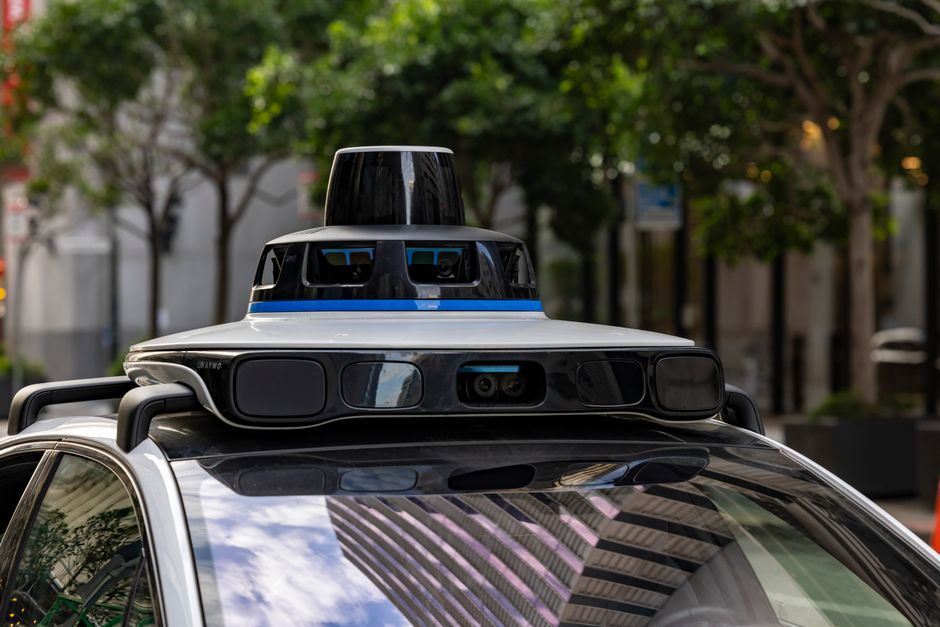
Similarly, a conversational AI needs to remember previous turns in a conversation, understand user intent that might evolve, and adapt its responses accordingly. Maintaining a coherent, context-aware dialogue over extended interactions is a significant challenge.
Limitations of training data
AI models are only as good as the data they are trained on. If the training data lacks sufficient examples of specific contextual situations, or if it contains biases, the AI will reflect those limitations. For instance, if an AI is trained predominantly on formal text, it might struggle with informal language, slang, or regional dialects.

Furthermore, it’s practically impossible to create a dataset that encompasses every conceivable real-world context. This inherent limitation means AI will always encounter situations it hasn’t been explicitly trained for, leading to contextual misinterpretations.
Navigating AI’s contextual blind spots
Understanding why AI struggles with context isn’t about dismissing its capabilities; it’s about recognizing its current limitations and designing better systems. Researchers are actively working on solutions, including:
- Multimodal AI: Combining different types of data (text, images, audio, video) to provide a richer, more comprehensive understanding of a situation.
- Knowledge graphs: Explicitly encoding common sense and factual knowledge into AI systems to give them a foundational understanding of the world.
- Improved reasoning architectures: Developing models that can perform more complex, multi-step reasoning to infer context rather than just pattern matching.
- Reinforcement learning from human feedback: Allowing AI to learn from real-world interactions and human corrections, gradually improving its contextual awareness.

As users and developers, acknowledging these contextual blind spots is crucial. We must design AI systems that incorporate human oversight where nuance is critical, provide clear and unambiguous instructions, and understand that while AI is a powerful tool, it’s not a sentient being with human-like understanding. The goal isn’t to make AI perfectly human, but to make it a more reliable, practical, and context-aware assistant in our increasingly tech-driven world.




1 Comment