
Unpacking the brain-AI connection
Have you ever wondered how AI can recognize faces, understand your voice, or even drive a car? Much of this incredible capability stems from a technology inspired by the most complex organ we know: the human brain. We’re talking about neural networks, the backbone of modern artificial intelligence. At TechDecoded, we love breaking down complex tech, and today, we’re diving deep into how these digital marvels mirror our biological gray matter.

The idea isn’t to perfectly replicate the brain, but rather to borrow its fundamental principles of learning and pattern recognition. By understanding this connection, we can better grasp the power and potential of AI.
What are artificial neural networks?
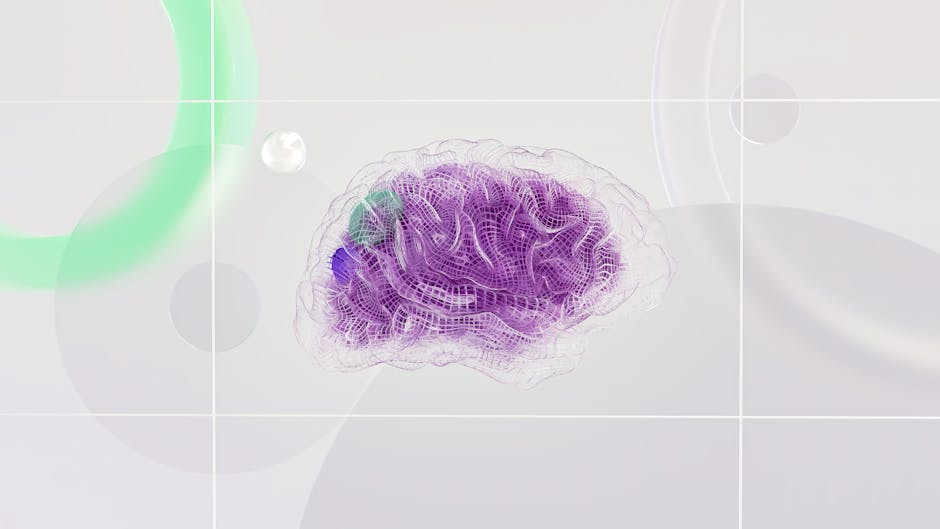
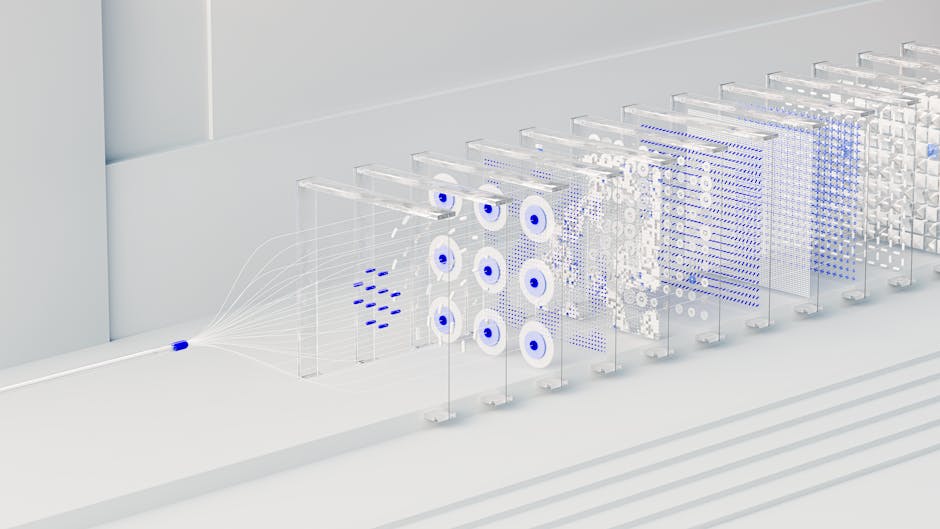
At its core, an artificial neural network (ANN) is a computational model designed to simulate the way biological brains process information. It’s built from interconnected nodes, or ‘neurons,’ organized in layers. Each neuron takes inputs, performs a simple calculation, and then passes the result to subsequent neurons.
- Input layer: Receives raw data (e.g., pixels from an image, words from a sentence).
- Hidden layers: Perform computations and extract features from the input. There can be one or many hidden layers, making the network ‘deep’ (hence, deep learning).
- Output layer: Produces the final result (e.g., a classification, a prediction).
This layered structure allows the network to learn increasingly complex patterns as information flows through it.
The neuron’s role: A simple processing unit
Just like a biological neuron receives signals through dendrites, processes them in the cell body, and transmits them via an axon, an artificial neuron (often called a perceptron) does something similar. It takes multiple numerical inputs, each multiplied by a ‘weight’ – a value that determines the input’s importance. These weighted inputs are summed up, and then passed through an ‘activation function’.
The activation function decides whether the neuron ‘fires’ (activates) or not, much like a biological neuron’s threshold. This non-linear step is crucial, allowing neural networks to learn complex, non-linear relationships in data that simpler models can’t.
Learning and adaptation: The network’s ‘experience’
The real magic happens in how neural networks learn. It’s not about being explicitly programmed for every task; it’s about learning from data. This process is often compared to how a child learns through trial and error.
When a neural network is trained, it’s fed vast amounts of data with known outcomes. For example, if it’s learning to identify cats, it’s shown thousands of images labeled ‘cat’ or ‘not cat’.
- Forward propagation: The input data flows through the network, and it makes a prediction.
- Error calculation: The network’s prediction is compared to the actual correct answer, and an ‘error’ is calculated.
- Backpropagation: This error is then sent backward through the network. During this phase, the weights and biases (another adjustable parameter) of each connection are slightly adjusted to reduce the error in future predictions.
This iterative process of forward propagation, error calculation, and backpropagation allows the network to gradually refine its internal parameters, making its predictions more accurate over time. It’s essentially teaching the network to recognize patterns by showing it examples and correcting its mistakes.
Real-world impact: Where brain-inspired AI shines
The ability of neural networks to learn from data and identify intricate patterns has led to breakthroughs across countless fields:
- Image recognition: From facial recognition on your phone to medical image analysis, neural networks excel at understanding visual data.

- Natural language processing (NLP): Powering translation services, spam filters, and chatbots that understand and generate human-like text.
- Speech recognition: The technology behind voice assistants like Siri and Alexa.
- Recommendation systems: Suggesting movies on Netflix or products on Amazon based on your past behavior.
- Autonomous vehicles: Helping cars ‘see’ and interpret their surroundings to navigate safely.
These applications demonstrate how mimicking the brain’s ability to learn from experience can lead to incredibly powerful and versatile AI systems.
The evolving intelligence: Our brain-inspired future
While neural networks are inspired by the human brain, they are not exact replicas. Our brains are far more complex, energy-efficient, and capable of learning from very few examples. However, the continuous advancements in neural network architectures, computational power, and training data are pushing the boundaries of what AI can achieve.

Understanding how these networks learn and adapt is key to demystifying AI and appreciating its potential. As TechDecoded always emphasizes, making technology accessible helps everyone leverage its power. The journey of brain-inspired AI is far from over, promising even more intelligent and intuitive tools in the years to come.
Leave a Comment