

The magic of AI image generation: From words to visuals
In recent years, artificial intelligence has moved from the realm of science fiction into our everyday lives, creating everything from personalized recommendations to self-driving cars. One of its most captivating feats is the ability to generate stunning, original images from simple text descriptions.  It’s like having a digital artist at your fingertips, ready to bring any concept to life. But how exactly does this magic happen? At TechDecoded, we’re here to demystify the process, breaking down the complex algorithms into human-friendly explanations.
At its core: Understanding the AI artist
Imagine telling a computer, “Create an image of a futuristic city at sunset with flying cars.” Moments later, a unique, high-quality image appears. This incredible capability is powered by advanced machine learning models trained on vast datasets of images and their corresponding descriptions. These models learn the intricate relationships between words and visual elements, allowing them to ‘understand’ a prompt and ‘paint’ an image that matches it.
The foundational technologies: GANs and diffusion models
While several approaches exist, two technologies have largely driven the revolution in AI image generation:
-
Generative Adversarial Networks (GANs)
GANs, introduced in 2014, work like a game between two neural networks: a ‘generator’ and a ‘discriminator’.
- The Generator: This network’s job is to create new images, starting from random noise. It tries to fool the discriminator into thinking its creations are real.
- The Discriminator: This network acts as a critic, looking at both real images from a dataset and images produced by the generator. Its job is to distinguish between real and fake.
Through this adversarial training, both networks improve. The generator gets better at creating realistic images, and the discriminator gets better at spotting fakes, until the generator can produce images so convincing that the discriminator can no longer tell the difference.
- The Generator: This network’s job is to create new images, starting from random noise. It tries to fool the discriminator into thinking its creations are real.
-
Diffusion Models
More recently, diffusion models have taken the lead, powering many of today’s most impressive text-to-image generators. These models work by learning to reverse a process of adding noise to an image.
- The Forward Process (Noise Addition): Imagine taking a clear image and gradually adding random noise to it until it’s just pure static.
- The Reverse Process (Denoising): A diffusion model is trained to learn how to reverse this process. Given a noisy image, it learns to predict and remove the noise, step by step, until it reconstructs the original clear image.
When generating a new image, the model starts with pure noise and iteratively ‘denoises’ it, guided by a text prompt, until a coherent image emerges. This iterative refinement allows for incredibly detailed and high-quality outputs.
- The Forward Process (Noise Addition): Imagine taking a clear image and gradually adding random noise to it until it’s just pure static.
From text prompt to stunning visual: The generation workflow
So, you type a prompt like “A majestic lion wearing a crown, in a vibrant jungle, digital art.” What happens next?
- Encoding the prompt: First, the AI doesn’t understand words like we do. A component, often a large language model (LLM) or a text encoder, translates your text prompt into a numerical representation (a ‘vector’ or ’embedding’) that the image generation model can understand. This vector captures the semantic meaning of your words.
- Starting with noise: The image generation model (especially diffusion models) typically starts with a canvas of pure random noise, a visual equivalent of static.
- Iterative refinement in latent space: Guided by the encoded prompt, the model begins an iterative process. It makes small adjustments to the noise, gradually shaping it towards the desired image. This happens in a ‘latent space’ – a compressed, abstract representation of images where similar concepts are grouped together.
- Upscaling and detailing: As the image takes shape in latent space, it’s then converted back into a pixel-based image. Further refinement and upscaling steps might be applied to add fine details and increase resolution, resulting in the final, polished output.
Key terms in AI image generation
To better navigate the world of AI art, here are a few essential concepts:
- Prompt: The text description you provide to guide the AI in generating an image. Crafting good prompts is an art in itself!
- Latent Space: An abstract, multi-dimensional mathematical space where AI models represent and manipulate data (like images or concepts) in a compressed form. It’s where the AI ‘think’ about images.
- Parameters: Settings you can adjust to influence the generation process, such as ‘guidance scale’ (how closely the AI adheres to your prompt) or ‘sampling steps’ (how many iterations the AI takes to refine the image).
- Inpainting/Outpainting: Techniques to modify specific parts of an existing image or extend an image beyond its original borders, respectively.
Beyond novelty: Practical applications of AI image generation
The ability to create images on demand has far-reaching implications:
- Creative industries: Artists, graphic designers, and marketers use AI to brainstorm ideas, create concept art, generate unique illustrations, and produce marketing materials quickly.
- Product design: Designers can rapidly visualize different product variations or architectural concepts.
- Education and research: Creating custom visual aids for learning materials or generating synthetic data for training other AI models.
- Personal expression: Empowering anyone to bring their imaginative ideas to life without needing traditional artistic skills.
Navigating the complexities: Challenges and ethical considerations
While exciting, AI image generation isn’t without its challenges:
- Bias: AI models are trained on existing data, which can contain biases. This can lead to generated images reflecting or even amplifying societal stereotypes.
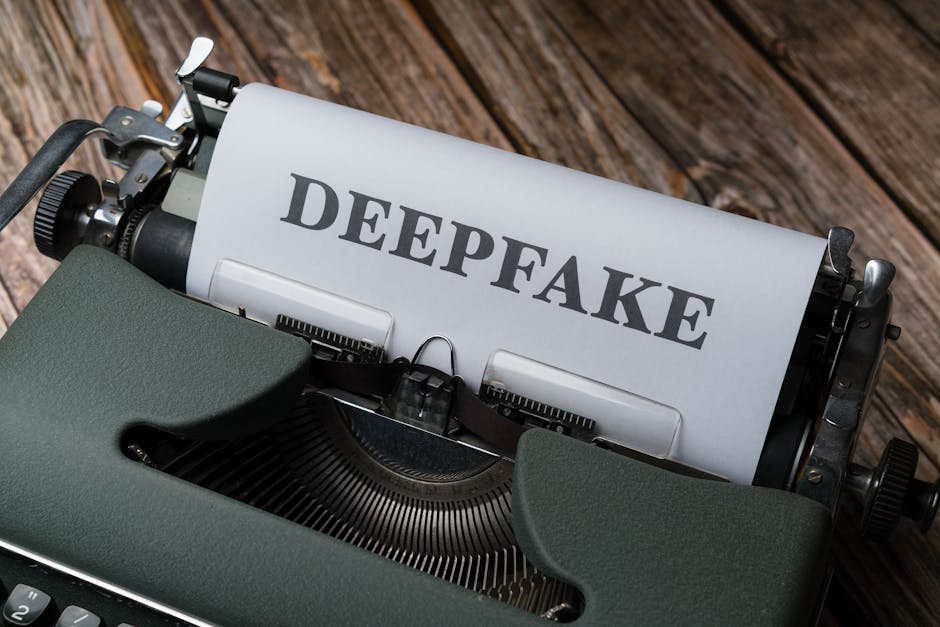
- Misinformation and deepfakes: The ability to create highly realistic images can be misused to generate fake news or manipulate public perception.
- Copyright and ownership: Questions arise about the ownership of AI-generated art, especially when models are trained on copyrighted works.
- Environmental impact: Training these large models requires significant computational resources and energy.
Empowering creativity: Your role in the AI art revolution
AI image generation is more than just a technological marvel; it’s a powerful tool that democratizes creativity and opens up new avenues for expression. As these models continue to evolve, understanding their underlying mechanisms becomes crucial for harnessing their potential responsibly and effectively. At TechDecoded, we believe that by understanding how these tools work, you can not only appreciate their capabilities but also contribute to shaping a future where AI serves as a true partner in human innovation. Experiment with prompts, explore different models, and join the conversation about how we can best integrate this incredible technology into our lives.
Leave a Comment