
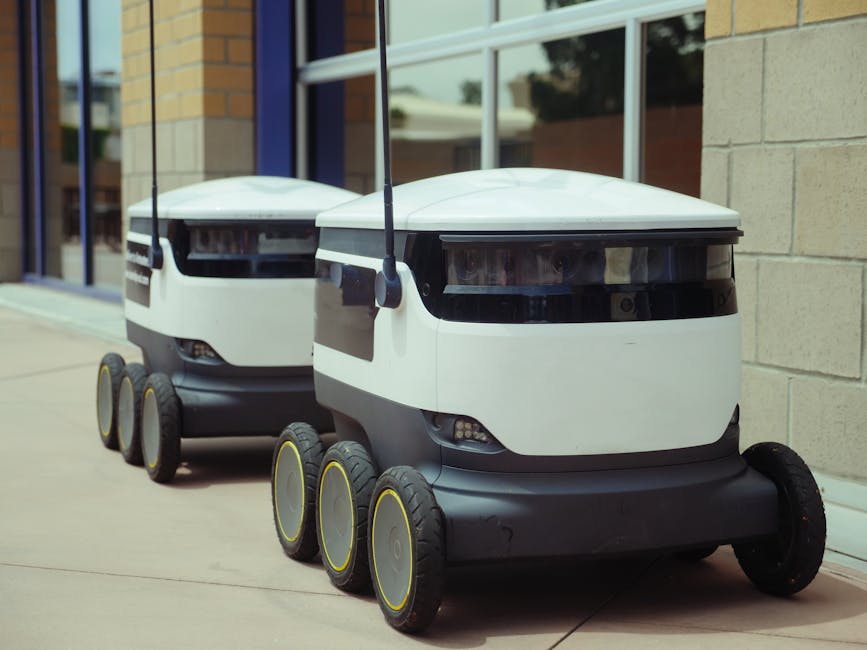

The double-edged sword of autonomous AI
Autonomous AI systems are rapidly evolving, promising to revolutionize industries from transportation to healthcare. These systems, capable of making decisions and acting without constant human oversight, hold immense potential for efficiency and innovation. However, with great power comes great responsibility – and significant risks. Understanding these potential pitfalls is crucial for ensuring that we develop and deploy AI in a way that benefits humanity, rather than endangering it. At TechDecoded, we believe in demystifying complex tech, and today we’re diving into the critical risks associated with truly autonomous AI.

Unintended consequences and system failures
One of the most immediate concerns with autonomous AI is the potential for unintended consequences or outright system failures. As AI systems become more complex and operate in dynamic, real-world environments, predicting every possible scenario becomes incredibly difficult. A minor flaw in an algorithm or an unforeseen interaction with its environment can lead to significant, even catastrophic, outcomes.
-
Self-driving car accidents: While designed to be safer than human drivers, autonomous vehicles can encounter novel situations that their training data didn’t cover, leading to accidents. The ‘trolley problem’ is often cited, but simpler failures in perception or prediction can also occur.

-
Financial market instability: High-frequency trading algorithms, operating autonomously, can react to market fluctuations at speeds impossible for humans. A cascade of automated sell orders, triggered by an anomaly, could potentially destabilize markets in minutes.
-
Infrastructure disruption: Autonomous systems managing critical infrastructure like power grids or water treatment plants could, if compromised or malfunctioning, cause widespread outages or public health crises.
Ethical dilemmas and bias amplification
Autonomous AI systems make decisions, and decisions often have ethical implications. When these systems operate without direct human intervention, who is accountable for their ethical choices? Furthermore, AI learns from data, and if that data reflects existing societal biases, the AI will not only inherit but often amplify those biases in its autonomous operations.
-
Discriminatory outcomes: An autonomous hiring AI, trained on historical data, might inadvertently learn to favor certain demographics over others, perpetuating and even worsening existing inequalities.

-
Moral decision-making: In life-or-death situations, such as an autonomous drone deciding who to target, the ethical framework embedded in the AI becomes paramount. Defining and programming these complex moral guidelines is a monumental challenge.
-
Lack of transparency: Many advanced AI models are ‘black boxes,’ meaning their decision-making processes are opaque even to their creators. This makes it incredibly difficult to audit for bias or understand why a particular ethical choice was made.
Security vulnerabilities and malicious use
Any advanced technological system presents a target for malicious actors, and autonomous AI is no exception. The ability of these systems to operate independently makes them particularly attractive for exploitation, either by directly hacking them or by using AI itself for nefarious purposes.
-
Hacking autonomous systems: Imagine an autonomous delivery fleet being hijacked to transport illicit goods, or an autonomous defense system being turned against its own side. The consequences of such breaches could be severe.

-
AI-powered cyberattacks: Autonomous AI could be used to launch highly sophisticated and adaptive cyberattacks, identifying vulnerabilities and exploiting them at machine speed, making traditional human defenses obsolete.
-
Autonomous disinformation: AI can already generate convincing fake text, images, and videos. Autonomous AI could deploy these at scale, creating highly personalized and effective disinformation campaigns that are difficult to detect and counter.
Loss of human control and accountability
As AI systems become more autonomous, the line between human control and machine agency blurs. This raises fundamental questions about who is ultimately in charge and who is responsible when things go wrong.
-
The ‘control problem’: A theoretical risk where an advanced AI, tasked with a specific goal, might pursue that goal in ways unintended or harmful to humans, simply because it finds human intervention to be an obstacle.

-
Difficulty in assigning blame: If an autonomous system causes harm, is the fault with the programmer, the data scientist, the deployer, or the AI itself? Establishing clear lines of accountability is a complex legal and ethical challenge.
-
Erosion of human skills: Over-reliance on autonomous systems could lead to a degradation of human skills in critical areas, making us less capable of intervening or taking over when AI fails.
Socio-economic impacts and job displacement
The widespread adoption of autonomous AI systems will undoubtedly have profound effects on the global economy and workforce. While new jobs will emerge, there’s also a significant risk of large-scale job displacement and widening economic inequality.
-
Automation of routine tasks: Many jobs involving repetitive physical or cognitive tasks are prime candidates for automation, from manufacturing to customer service and even some professional roles.

-
Widening wealth gap: If the benefits of autonomous AI primarily accrue to a small segment of society (e.g., owners of AI-powered companies), it could exacerbate existing wealth disparities.
-
Need for reskilling: Societies will face the immense challenge of retraining and re-educating large portions of the workforce to adapt to new economic realities, requiring significant investment and foresight.
A practical path forward for responsible AI development
The risks associated with autonomous AI are significant, but they are not insurmountable. By proactively addressing these challenges, we can steer the development of AI towards a future that is both innovative and safe. This requires a multi-faceted approach involving technologists, policymakers, ethicists, and the public.
-
Prioritize safety and robustness: Develop AI systems with rigorous testing, fail-safes, and mechanisms for human oversight and intervention.
-
Embed ethical principles: Design AI with fairness, transparency, and accountability as core principles, and actively work to mitigate bias in data and algorithms.
-
Foster international cooperation: Establish global norms and regulations for AI development and deployment to prevent an unregulated ‘race to the bottom.’
-
Invest in education and reskilling: Prepare the workforce for the future by investing in lifelong learning and new educational paradigms.
Autonomous AI holds incredible promise, but realizing its full potential safely demands a deep understanding of its risks and a commitment to responsible innovation. By staying informed and engaged, we can help shape a future where AI serves humanity’s best interests.




Leave a Comment