
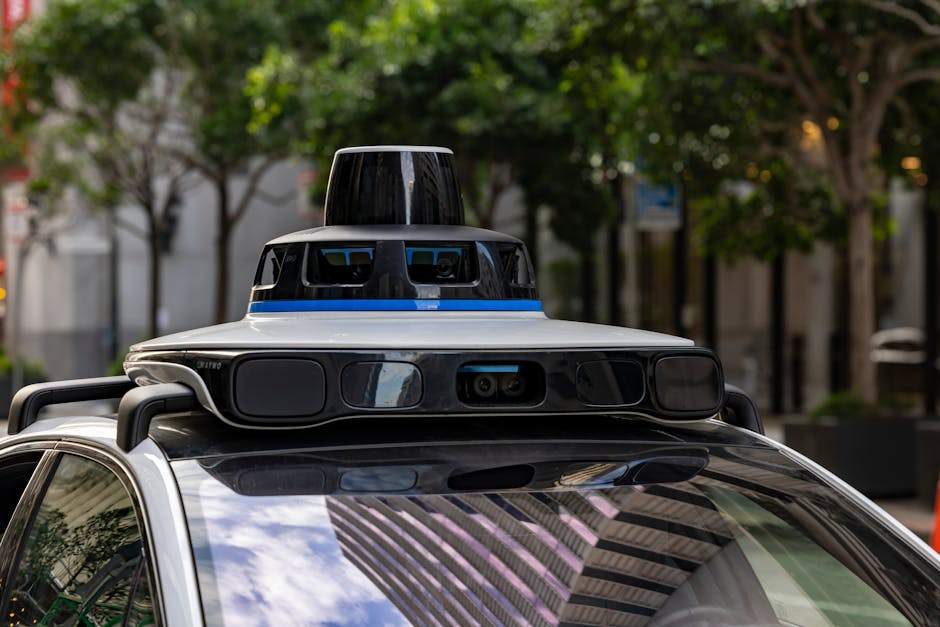

What exactly are AI agents?
In the rapidly evolving world of artificial intelligence, the term ‘AI agent’ is becoming increasingly common. But what does it actually mean? At its core, an AI agent is a piece of software designed to perceive its environment, make decisions, and take actions to achieve specific goals. Think of it as a digital assistant with a purpose, operating within defined parameters.
These agents aren’t just simple scripts; they often incorporate advanced AI models, like large language models (LLMs), to reason, plan, and learn. They can range from a chatbot answering customer queries to a complex system managing supply chains. Their ability to operate without constant human input is what often leads to discussions about their ‘autonomy’.
- Perception: Gathering information from their environment (e.g., reading emails, monitoring data feeds).
- Reasoning: Processing perceived information to understand context and implications.
- Planning: Devising a sequence of actions to achieve a goal.
- Action: Executing the planned steps (e.g., sending an email, updating a database).
- Memory: Storing past experiences and learning from them to improve future performance.

The spectrum of autonomy: From scripts to self-correction
When we talk about AI autonomy, it’s crucial to understand that it’s not a binary state but a spectrum. On one end, you have simple automated scripts that follow predefined rules without deviation. On the other, you have sophisticated systems that can adapt, learn, and even redefine sub-goals based on new information. Most AI agents today fall somewhere in the middle, exhibiting varying degrees of independence.
For instance, a basic AI agent might be programmed to send a daily report at a specific time. Its autonomy is limited to executing that single, repetitive task. A more advanced agent, however, might be tasked with optimizing a marketing campaign. It could analyze real-time data, adjust ad spend, modify targeting parameters, and even suggest new content ideas – all without direct human intervention for each step. This level of autonomy involves complex decision-making within a given framework.
- Reactive Agents: Respond directly to current perceptions based on predefined rules, with no memory or planning.
- Deliberative Agents: Possess internal models of the world, can plan sequences of actions, and learn from past experiences.
- Goal-Oriented Agents: Not only plan but also have the ability to set sub-goals and prioritize tasks to achieve a larger objective.
- Learning Agents: Continuously improve their performance by analyzing outcomes and adapting their strategies over time.

Where AI agents fall short of true independence
Despite their impressive capabilities, current AI agents are not truly autonomous in the human sense. They operate within boundaries set by their human creators and the data they are trained on. Their ‘decisions’ are sophisticated computations based on algorithms, not genuine understanding, consciousness, or free will.
Several factors limit their independence:
- Human-defined goals: Every AI agent has a purpose, and that purpose is always defined by a human. They don’t spontaneously decide to pursue new objectives.
- Data dependency: Their ability to perceive and reason is entirely dependent on the quality and scope of the data they’ve been trained on. Biases or gaps in data can lead to flawed decisions.
- Lack of common sense: AI agents lack the intuitive understanding of the world that humans possess. They can’t reason outside their programmed domain or adapt to truly novel, unforeseen situations without explicit programming or retraining.
- Ethical and moral reasoning: AI agents do not possess a moral compass or ethical framework beyond what is explicitly coded into them. Complex ethical dilemmas require human judgment.
- Resource limitations: Even the most advanced agents are constrained by computational power, memory, and access to information.

The human element: Why supervision remains crucial
Given these limitations, human oversight remains not just important, but absolutely crucial for the effective and responsible deployment of AI agents. Humans are needed to define the agent’s goals, set its operational boundaries, monitor its performance, and intervene when it encounters situations it’s not equipped to handle.
This collaboration between human and AI is often referred to as ‘human-in-the-loop’ or ‘human-on-the-loop’. Humans provide the context, ethical guidance, and common sense that AI agents currently lack, ensuring that the agents’ actions align with desired outcomes and societal values. As AI agents become more sophisticated, the nature of human supervision may shift from direct control to more strategic guidance and ethical auditing, but the need for human involvement will persist.

Navigating the future: Responsible AI agent development
The journey towards more capable AI agents is ongoing, and the concept of autonomy will continue to evolve. As these agents become more sophisticated, understanding their true capabilities and limitations will be paramount. Responsible development means focusing on transparency, explainability, and robust control mechanisms.
Instead of striving for complete, unsupervised autonomy, the focus should be on creating intelligent tools that augment human capabilities, handle complex tasks efficiently, and free up human creativity for higher-level problem-solving. The future of AI agents lies in a partnership where technology empowers us, rather than replaces our critical judgment.
- Prioritize transparency: Design agents whose decision-making processes can be understood and audited.
- Implement robust safeguards: Build in mechanisms for human intervention and emergency stops.
- Focus on human augmentation: Develop agents that enhance human capabilities, not just automate tasks.
- Educate users: Ensure users understand the scope and limitations of AI agents they interact with.
- Foster ethical guidelines: Continuously develop and refine ethical frameworks for AI agent deployment.




Leave a Comment