
The great debate: Is AI a creative killer or a catalyst?
The rise of artificial intelligence has sparked a passionate debate, particularly within creative fields. Many fear that AI will automate artists, writers, and musicians out of existence, stripping humanity of its unique spark. At TechDecoded, we believe this perspective misses the bigger picture. AI isn’t here to kill creativity; it’s here to change it, offering powerful new tools and opening up unprecedented avenues for human expression.
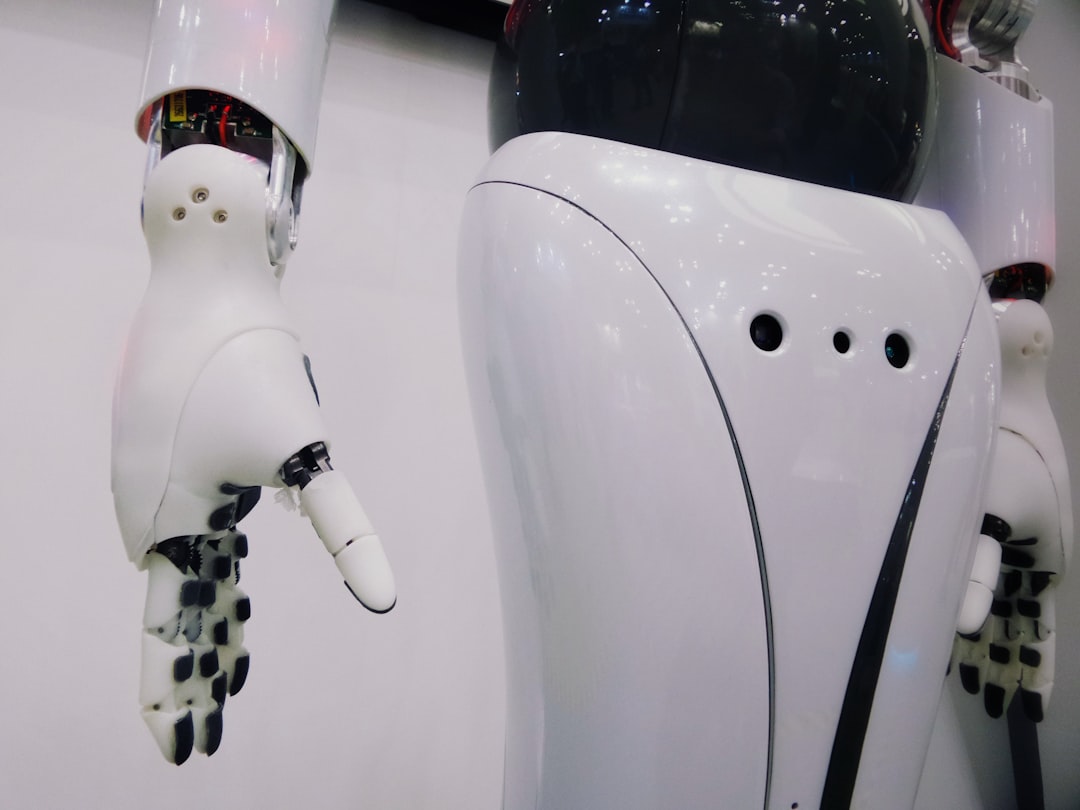
Instead of viewing AI as a competitor, imagine it as a sophisticated co-pilot, a tireless assistant, or even a muse that can push the boundaries of what’s possible. This article will explore how AI is not just augmenting, but actively evolving the creative process, making it more accessible, efficient, and innovative than ever before.
Beyond automation: AI as a creative partner
One of the most exciting aspects of AI in creativity is its ability to act as a genuine partner in the ideation process. Far from simply automating repetitive tasks, AI tools can generate novel concepts, explore diverse styles, and even help overcome creative blocks.
- Brainstorming and ideation: AI can quickly generate hundreds of ideas for story plots, song lyrics, visual concepts, or marketing slogans based on a few prompts, giving creators a rich starting point.
- Style exploration: Want to see your painting in the style of Van Gogh or your song as a jazz fusion piece? AI can rapidly transform and adapt content, allowing artists to experiment with styles they might not master themselves.
- Overcoming creative blocks: When inspiration wanes, an AI can offer fresh perspectives, unexpected combinations, or even complete a challenging section, reigniting the human creator’s flow.
Tools like large language models (LLMs) for text and generative adversarial networks (GANs) for images are prime examples of AI’s capacity to produce original content, which human creators can then refine, curate, and infuse with their unique vision.
Freeing the artist: Automating the mundane
Every creative endeavor involves a significant amount of repetitive or technical work that can drain time and energy. This is where AI truly shines as an efficiency booster, freeing up creators to focus on the high-level conceptualization and emotional depth that only humans can provide.
- Image and video editing: AI can automate tasks like background removal, color correction, upscaling, or even generating entire video sequences from text prompts, drastically cutting down production time.
- Music production: From generating drum beats and basslines to mixing and mastering, AI can handle many technical aspects of music creation, allowing musicians to focus on melody and lyrics.
- Data analysis for insights: For content creators, AI can analyze audience engagement data to identify trends, optimize content strategies, and understand what truly resonates, informing future creative choices.
By offloading these time-consuming tasks, AI empowers artists to spend more time on the truly creative, value-adding aspects of their work, leading to higher quality and more innovative output.
New frontiers: Exploring AI-powered art forms
AI isn’t just making existing creative processes more efficient; it’s enabling entirely new forms of art and expression. We are witnessing the birth of genres and mediums that were previously unimaginable.
- Generative art: Algorithms create intricate and evolving visual pieces, often interactive, that respond to inputs or even live data streams.
- AI music composition: Beyond assisting, AI can compose entire symphonies or pop songs, sometimes indistinguishable from human-made music, opening discussions about authorship and originality.
- Interactive narratives and games: AI can power dynamic storylines, create unique character dialogues, and generate vast, explorable worlds that adapt to player choices in real-time.
The role of the “prompt engineer” or “AI director” is emerging – individuals who master the art of communicating with AI to guide its creative output, blending technical understanding with artistic vision. This new skill set is a testament to the evolving nature of creativity itself.
The irreplaceable human touch: Intent, emotion, and curation
Despite AI’s impressive capabilities, there remains a fundamental difference between human and artificial creativity. AI lacks consciousness, personal experience, genuine emotion, and the deep-seated intent that drives human artistic expression.
Humans provide the soul, the narrative, and the emotional resonance that truly connects with an audience. AI can generate a beautiful image, but a human artist imbues it with meaning, a backstory, and a specific message. The human role shifts from solely being the producer to also being the curator, the editor, the storyteller, and the visionary who guides the AI’s output towards a specific artistic goal. It’s the human who decides what is truly art, what resonates, and what communicates effectively.
Navigating the ethical and practical landscape
Of course, the integration of AI into creative fields isn’t without its challenges. Concerns around copyright, originality, and the potential for job displacement are valid and require careful consideration. As AI tools become more sophisticated, discussions around fair use, attribution, and the definition of “original work” will intensify.
However, history shows that new technologies rarely eliminate entire creative professions; instead, they transform them. Photographers didn’t replace painters, and digital art didn’t replace traditional mediums. Instead, new tools create new opportunities and demand new skills. The key for creators will be adaptation, continuous learning, and embracing AI as a powerful amplifier of their unique human talents.
Embracing the creative evolution with AI
The narrative that AI is a threat to creativity is a limited one. A more accurate and empowering perspective is that AI is a powerful new tool, much like the printing press, the camera, or the synthesizer before it. It’s a catalyst for evolution, pushing the boundaries of what we thought was possible and inviting us to redefine what it means to be creative in the 21st century.
For artists, writers, musicians, and designers, the future isn’t about competing with AI; it’s about collaborating with it. It’s about leveraging AI to enhance productivity, explore new ideas, and unlock creative potential that was previously out of reach. By understanding and embracing AI, we can usher in a new golden age of creativity, where human ingenuity is amplified, not diminished.
Leave a Comment