


The idea of "prompt engineer" as a dedicated job title is rapidly becoming obsolete. While early large language models (LLMs) often required highly specialized techniques to coax useful outputs, the skill of effective prompting is quickly transforming into a fundamental competency for nearly everyone interacting with AI, much like knowing how to use a search engine or a spreadsheet. The focus is shifting from arcane prompt crafting to integrating AI effectively into existing workflows.
The initial hype and the "prompt engineer" role
When generative AI first broke into the mainstream, models were powerful but often finicky. Getting a useful response frequently depended on intricate prompt structures, specific phrasing, and even "magic words" that seemed to unlock better performance. This led to the emergence of the "prompt engineer" — a specialist tasked with designing, testing, and refining prompts to achieve desired outcomes from LLMs. Companies, eager to leverage new AI capabilities, sometimes hired individuals specifically for this role, often with six-figure salaries.
This initial phase was understandable. The technology was new, and understanding its quirks required dedicated experimentation. Prompt engineering was seen as a bridge between human intent and machine understanding, a way to "speak" to AI in its own language. However, this perception often overstated the long-term viability of prompt crafting as a standalone career.
Why models are getting easier to prompt
The need for hyper-specialized prompt engineering is diminishing for several key reasons:
- Improved model capabilities: Newer LLMs are significantly more robust and better at understanding natural language. They can follow complex instructions, maintain context over longer interactions, and are less sensitive to minor variations in prompt wording. This means a well-articulated request in plain English often yields good results without needing elaborate formatting or few-shot examples.
- Better fine-tuning and RAG: Organizations are increasingly fine-tuning models on their proprietary data or implementing Retrieval Augmented Generation (RAG) systems. These approaches embed domain-specific knowledge directly into the AI’s accessible context, reducing the burden on the user to provide all necessary information or guide the model through complex reasoning paths via the prompt. When a model is already equipped with relevant data, the prompt becomes more about directing its focus than providing foundational knowledge.
- Tool integration and abstraction: AI is being integrated into applications and platforms where the underlying prompting is abstracted away. Users interact with a graphical interface, fill out forms, or select options, and the application constructs the optimal prompt behind the scenes. This makes AI accessible to a broader audience without requiring any direct prompt engineering skill.
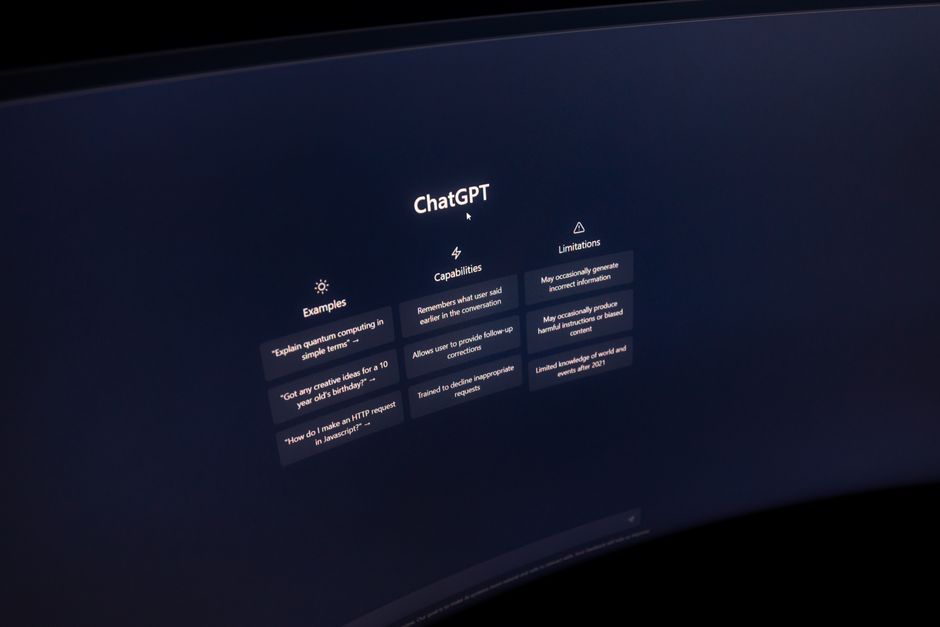
Prompting as a universal skill, not a niche profession
The ability to effectively communicate with an AI — to ask clear questions, provide sufficient context, specify desired formats, and iterate on responses — is rapidly becoming a fundamental digital skill. It's akin to:
- Using a search engine: Knowing how to phrase a query to get relevant results, use operators, and filter information is a basic skill for internet users.
- Writing effective emails: Crafting a clear subject line, concise body, and call to action is essential for professional communication.
- Creating a spreadsheet formula: Understanding how to structure a function to achieve a specific calculation is a core competency for many office workers.
These aren’t standalone job titles, but rather essential components of many roles. Similarly, "prompting" is evolving into a critical facet of general digital literacy. For instance, a marketing professional will need to know how to prompt an AI for campaign ideas, a developer for code snippets, and a researcher for literature summaries. The skill lies in understanding the AI’s capabilities and limitations, and then formulating requests that leverage its strengths for a specific task.
Tools that streamline advanced AI interactions
While direct prompting is becoming a fundamental skill, a growing ecosystem of tools and platforms is emerging to help individuals and organizations manage, optimize, and scale their interactions with large language models. These tools abstract away some of the complexities, allowing for more efficient and consistent AI utilization.
| Tool | Where it helps | Key limitation | When to choose it |
|---|---|---|---|
| LangChain / LlamaIndex | Orchestrating complex AI workflows, integrating LLMs with external data sources (RAG), and building multi-step agents. | Requires significant coding expertise and understanding of AI architecture; steep learning curve for non-developers. | For developers building custom AI applications that need to connect to diverse data, perform sequential tasks, or implement advanced reasoning. |
| Prompt engineering platforms (e.g., Humanloop, Vellum) | Managing prompt versions, A/B testing different prompts, evaluating model outputs, and collaborating on prompt design within teams. | Can be overkill for individual users or small projects; often involves a subscription cost. | For teams needing to systematically develop, test, and deploy prompts, especially in production environments where performance and consistency are critical. |
| No-code/Low-code AI builders (e.g., Zapier AI, Bubble.io with AI plugins) | Integrating AI capabilities into existing applications or building simple AI-powered workflows without writing extensive code. | Limited flexibility compared to custom coding; may not support highly specialized or complex AI interactions. | For business users or citizen developers looking to quickly add AI features to their tools or automate routine tasks without deep technical knowledge. |
| OpenAI Playground / Anthropic Console | Experimenting with different models, testing prompt variations, and understanding model behavior in a controlled environment. | Primarily for individual exploration and development; lacks robust features for team collaboration or production deployment. | For individual prompt experimentation, quick prototyping, and learning the nuances of specific LLMs before integrating them into larger systems. |
Crafting effective prompts: A structured approach
Beyond simply asking a question, effective prompting involves a structured approach that maximizes the utility of an AI. It’s less about finding a ‘magic word’ and more about clear communication, context, and iterative refinement. Consider the AI as a highly capable but literal assistant; the quality of its output directly reflects the clarity and completeness of your instructions. A common mistake is to provide insufficient context, leading to generic or irrelevant responses. For instance, asking an AI to
Beyond the prompt: Understanding AI’s inherent limitations
While the ability to craft effective prompts is becoming a foundational skill, true proficiency in leveraging AI extends beyond mere instruction-giving. It requires a deeper understanding of the technology’s inherent limitations and biases. Even the most advanced LLMs, despite their impressive linguistic capabilities, are not sentient and do not ‘understand’ in the human sense. They operate based on patterns learned from vast datasets, which means their outputs can sometimes be factually incorrect, nonsensical, or reflect biases present in their training data.
This is why critical evaluation of AI-generated content remains paramount. Users must develop the discernment to question outputs, verify information, and recognize when an AI is ‘hallucinating’ or providing a confident but incorrect answer. The skill isn’t just in asking the right question, but in knowing how to interpret the response and when to seek alternative sources or human expertise. For instance, understanding why AI chatbots should show uncertainty can significantly improve how we interact with and trust their outputs. Furthermore, the choice of model itself can impact outcomes, as evidenced by discussions around which AI model is best for specific tasks, highlighting that no single solution fits all needs.
Ultimately, integrating AI effectively into daily workflows means treating it as a powerful tool that augments human intelligence, rather than replacing it. It’s about developing a symbiotic relationship where human oversight, critical thinking, and domain expertise complement the AI’s speed and processing power.
The true value of advanced AI interaction
While the general skill of prompting becomes ubiquitous, highly specialized roles will still exist, but they will look different. These roles will focus less on crafting individual prompts and more on:




Leave a Comment