
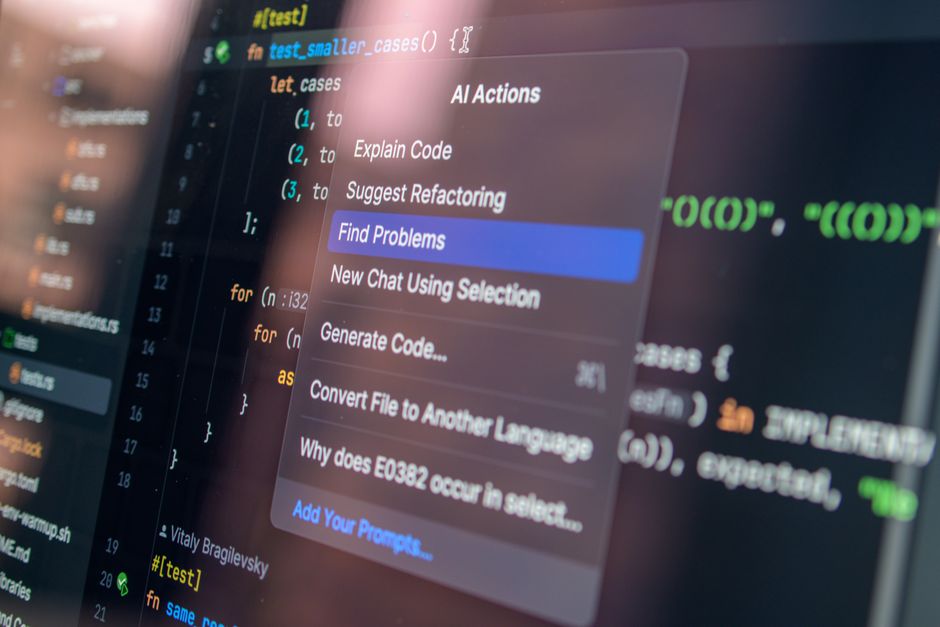

The Paradox of AI in Software Development
Artificial intelligence is rapidly changing how software is built, offering developers powerful tools to generate code, complete boilerplate, and even refactor existing systems. This has led to a significant increase in development velocity, making the act of writing code demonstrably easier and faster. However, this acceleration comes with a critical, often overlooked, trade-off: AI-generated code can be significantly harder to review, introducing new complexities for quality assurance and team collaboration.
The core problem isn"t that AI writes "bad" code — it often produces syntactically correct and functional snippets. The challenge lies in the *nature* of that code, which can obscure intent, introduce subtle bugs, or deviate from established patterns in ways that human reviewers struggle to detect efficiently. Understanding this paradox is crucial for teams looking to leverage AI effectively without compromising code quality or increasing long-term maintenance costs.

Why AI Makes Code Easier to Write
AI coding assistants excel at tasks that are repetitive, pattern-based, or require recalling vast amounts of API documentation. This translates into several tangible benefits for developers:
- Accelerated Boilerplate Generation: AI can quickly scaffold common structures, generate CRUD operations, or set up configuration files, freeing developers from tedious, repetitive typing.
- Contextual Autocompletion: Beyond simple word completion, AI can suggest entire lines or blocks of code based on the surrounding context, variable names, and project patterns.
- Language and Framework Translation: Developers can ask AI to translate code between programming languages or adapt it to different framework conventions, speeding up migration or learning new stacks.
- Refactoring and Optimization Suggestions: AI can identify opportunities to simplify code, improve readability, or suggest more performant algorithms, though human oversight is critical here.
These capabilities allow developers to focus more on high-level design and problem-solving, rather than the mechanics of writing every line of code. This shift in focus is a primary driver of the reported productivity gains.
The Hidden Costs: Why AI Code Is Harder to Review
While AI speeds up code generation, it fundamentally alters the code review process, often making it more complex and time-consuming. This isn"t just about finding bugs; it"s about maintaining architectural integrity, code consistency, and long-term maintainability.
Subtle Errors and "Plausible but Wrong" Code
AI models are trained on vast datasets, making them adept at generating code that *looks* correct and follows common patterns. However, they can introduce subtle logical flaws, edge-case failures, or security vulnerabilities that are difficult for a human eye to spot. This "plausible but wrong" characteristic means reviewers can"t simply skim for obvious syntax errors; they must deeply understand the generated code"s intent and implications.
Inconsistent Style and Architectural Drift
Even with careful prompting, AI-generated code may not perfectly align with a team"s established coding standards, architectural patterns, or domain-specific idioms. If not caught during review, this can lead to codebases becoming fragmented, harder to navigate, and more expensive to maintain over time. Reviewers must now act as stricter guardians of consistency and architectural coherence.
Reduced Context and Intent Obscurity
When a human writes code, their intent is often clear from the surrounding context, comments, and commit messages. AI-generated code, while functional, can sometimes lack this implicit context. A reviewer might see a block of code and struggle to understand *why* it was generated in that specific way, or what alternative approaches were considered and rejected. This makes it harder to assess correctness, efficiency, or adherence to design principles.
Increased Cognitive Load for Reviewers
Reviewing AI-generated code often requires more mental effort. Instead of evaluating a human"s thought process and implementation choices, reviewers are tasked with verifying a machine"s output, which can sometimes feel like debugging an opaque system. This increased cognitive load can lead to review fatigue and a higher chance of errors slipping through.
Comparing AI-powered Coding Assistants
As AI tools become integral to the development workflow, understanding their specific strengths and weaknesses is crucial for making informed choices. Different tools offer varying levels of assistance and come with distinct trade-offs, impacting both coding speed and review complexity. This is part of a broader discussion on the real AI productivity problem, which extends beyond just code generation.
| Tool | Where it helps | Key limitation | When to choose it |
|---|---|---|---|
| GitHub Copilot | Accelerates boilerplate, suggests entire lines/functions, translates comments to code. Deeply integrated into IDEs. | Can generate less optimal or less secure code if prompts are vague or context is limited. Requires careful review. | For individual developers or teams seeking significant acceleration in routine coding tasks and boilerplate generation. |
| Amazon CodeWhisperer | Provides context-aware recommendations, identifies security vulnerabilities, and offers code explanations. Focus on enterprise security. | May have a steeper learning curve for optimal prompting compared to more general-purpose tools. | For enterprises prioritizing security and compliance, especially those heavily invested in AWS services. |
| Tabnine | Offers private code models for enterprise, ensuring suggestions align with internal codebases and standards. Focus on privacy and customization. | Requires more setup and configuration to leverage its private model capabilities effectively. | For teams needing highly customized suggestions based on their proprietary code, or those with strict data privacy requirements. |
| Google Gemini Code Assist | Aids in code generation, debugging, and refactoring across various languages and environments, leveraging Google’s AI capabilities. | Integration and feature set can vary across different IDEs and cloud environments. | For developers working within the Google ecosystem or those seeking a powerful, multi-faceted AI assistant for complex tasks. |
The choice of tool often depends on specific project needs, team size, and existing infrastructure. Regardless of the tool, the underlying challenge of AI adoption as a workflow problem remains paramount, emphasizing the need for adapted review processes.
Strategies for Effective AI Code Review
To harness the benefits of AI coding tools without sacrificing quality, teams must adapt their code review practices. This isn"t about eliminating AI, but about integrating it intelligently into the development workflow.
1. Shift Focus from "What" to "Why" and "How"
Instead of just checking if the code works, reviewers need to scrutinize the underlying logic and design choices. Ask: "Why was this approach chosen?" "Does it align with our architectural principles?" "How does it handle edge cases?" This requires a deeper understanding of the problem domain and system architecture.
2. Emphasize Automated Testing and Static Analysis
Automated tests (unit, integration, end-to-end) become even more critical with AI-generated code. They provide a safety net against subtle bugs that human reviewers might miss. Similarly, static analysis tools can enforce coding standards, detect common anti-patterns, and flag potential security issues. For more on how AI can assist in testing, consider




Leave a Comment