

The invisible challenge: What is AI bias?
Artificial intelligence is rapidly transforming our world, from recommending products to powering medical diagnoses. Yet, beneath the surface of its impressive capabilities lies a critical challenge: AI bias. Simply put, AI bias occurs when an AI system produces outcomes that are unfairly prejudiced against certain individuals or groups. This isn’t usually intentional malice; rather, it’s a reflection of the data and assumptions fed into the system. Understanding this is the first step towards building more equitable and trustworthy AI.
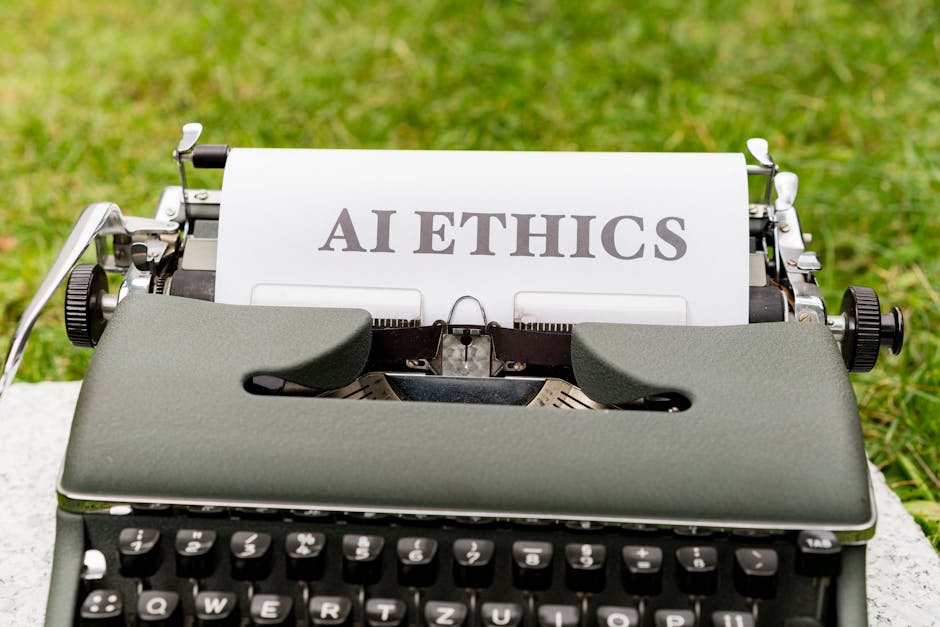
Imagine an AI hiring tool that consistently favors male candidates, or a facial recognition system that struggles to identify people with darker skin tones. These aren’t hypothetical scenarios; they are real-world examples of AI bias in action. The consequences can range from minor inconveniences to significant societal harm, impacting everything from financial opportunities to legal outcomes.
Where does AI bias come from? Unpacking its sources
To effectively combat AI bias, we must first understand its origins. Bias doesn’t magically appear; it’s often a byproduct of human decisions and historical inequalities embedded within the data and algorithms themselves.
- Biased training data: This is the most common culprit. If the data used to train an AI model is unrepresentative, incomplete, or reflects historical prejudices, the AI will learn and perpetuate those biases. For example, if an AI is trained predominantly on images of light-skinned individuals, it will perform poorly on others.
- Algorithmic bias: Sometimes, the way an algorithm is designed or the metrics it optimizes for can inadvertently introduce bias. For instance, an algorithm designed to maximize ‘efficiency’ might overlook fairness considerations.
- Human interaction and feedback loops: Even after deployment, human users can introduce or amplify bias. If an AI system’s outputs are consistently corrected in a biased way, or if feedback loops reinforce existing prejudices, the AI can become more biased over time.
- Problem formulation bias: The very definition of the problem an AI is trying to solve can be biased. If we ask an AI to predict ‘success’ without defining what success means in an equitable way, it might default to existing, biased definitions.

Strategies for building fair AI: A practical roadmap
Avoiding AI bias isn’t a one-time fix; it’s an ongoing commitment that requires vigilance across the entire AI lifecycle. Here are practical strategies you can implement:
Prioritize diverse and representative data
The foundation of fair AI is fair data. Actively seek out and incorporate diverse datasets that accurately reflect the populations the AI will serve. This means going beyond simple demographics to consider cultural, socio-economic, and historical contexts.
- Data auditing: Regularly audit your training data for imbalances, missing groups, and historical biases. Tools can help identify these disparities.
- Data augmentation: Where data is scarce for underrepresented groups, consider ethical data augmentation techniques to balance datasets.
- Synthetic data: Explore the use of synthetic data generation, carefully designed to be unbiased and representative, to supplement real-world data.

Implement rigorous model development and evaluation
Bias can be baked into the model itself. Developers must adopt practices that actively test for and mitigate these issues.
- Fairness metrics: Don’t just optimize for accuracy. Incorporate fairness metrics (e.g., demographic parity, equalized odds) into your model evaluation process to ensure equitable outcomes across different groups.
- Explainable AI (XAI): Use XAI techniques to understand how your model makes decisions. This transparency can help identify and debug sources of bias.
- Bias mitigation techniques: Explore algorithmic techniques designed to reduce bias during training or post-processing, such as re-weighting samples or adversarial debiasing.

Foster human oversight and ethical frameworks
Technology alone cannot solve the problem of bias. Human judgment and ethical guidelines are crucial.
- Diverse development teams: Teams with varied backgrounds and perspectives are more likely to identify and address potential biases in AI systems.
- Ethical guidelines and review boards: Establish clear ethical guidelines for AI development and deployment. Consider an independent ethics review board to scrutinize AI projects for potential biases and harms.
- Stakeholder engagement: Involve the communities and individuals who will be affected by the AI system in its design and evaluation. Their input is invaluable for identifying blind spots.

Embrace continuous monitoring and feedback loops
Bias can emerge or evolve over time, even in systems initially deemed fair. Continuous vigilance is key.
- Post-deployment monitoring: Continuously monitor AI system performance in real-world scenarios, paying close attention to outcomes for different demographic groups.
- Feedback mechanisms: Establish clear channels for users to report biased or unfair outcomes. Use this feedback to retrain and refine your models.
- Regular audits: Schedule periodic audits of your AI systems to re-evaluate their fairness and performance against evolving standards and data.

The path to responsible AI
Avoiding bias when using AI is not just a technical challenge; it’s an ethical imperative. As AI becomes more integrated into the fabric of our lives, ensuring its fairness and equity is paramount for building trust and preventing harm. By understanding the sources of bias, adopting proactive strategies in data and model development, fostering human oversight, and committing to continuous monitoring, we can collectively steer AI towards a future that benefits everyone, not just a select few. The journey to truly responsible AI is ongoing, but with conscious effort and a commitment to fairness, we can build a technological landscape that is both powerful and just.




Leave a Comment