
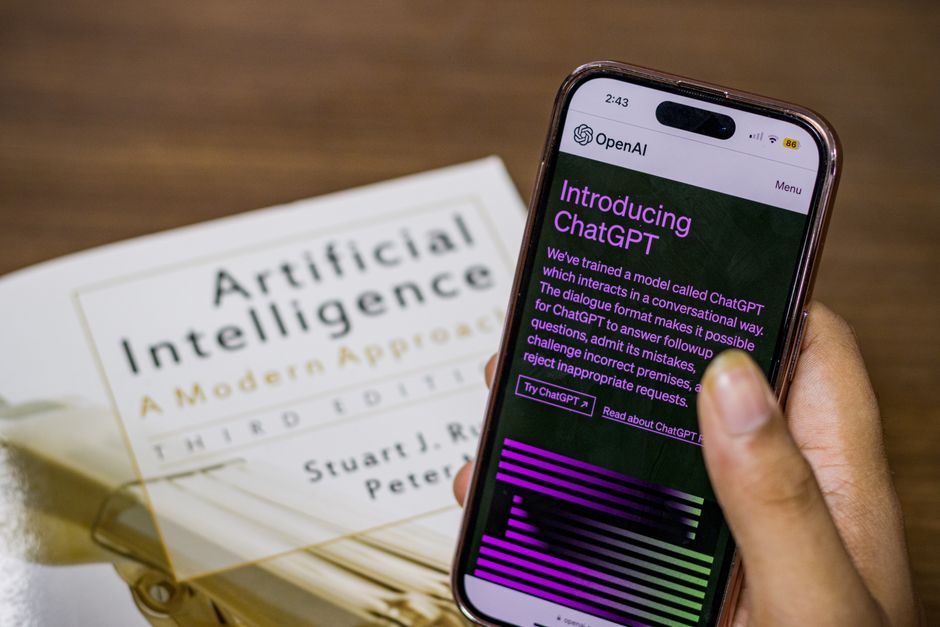

The question "Is Claude better than ChatGPT?" is common, yet it misses a crucial point: neither large language model is universally superior. The honest answer depends entirely on the specific task at hand, as each model often exhibits different strengths in areas like creative generation, factual accuracy, conciseness, or adherence to safety guidelines. Users should evaluate their needs against the nuanced capabilities of each AI assistant rather than seeking a single "best" option.
Why "better" is the wrong question for AI models
Comparing AI models like Claude and ChatGPT isn’t like comparing two identical products where one simply outperforms the other across all metrics. Instead, it’s more akin to choosing between specialized tools in a workshop. Each model is developed with different architectural choices, training data philosophies, and alignment objectives, leading to distinct behavioral patterns and optimal use cases. Focusing on a universal "better" overlooks these fundamental differences and can lead to suboptimal tool selection.
Benchmarking often highlights specific performance aspects, but these rarely translate directly to real-world utility. As we’ve discussed before, why AI benchmarks tell you little about your real work is a critical consideration. What matters is how a model performs on *your* specific tasks, with *your* data, and *your* desired output characteristics.
When conciseness and directness matter
For tasks requiring straightforward, concise answers or code snippets without extensive preamble, one model might be preferred. Some users find that certain models, depending on their version and prompt engineering, tend to be more verbose or conversational by default, which can be inefficient for quick information retrieval or code generation where only the core solution is needed.
Conversely, if the task benefits from detailed explanations, contextual background, or a more conversational tone, a model known for its verbosity might be an advantage. For instance, when learning a new concept, a more expansive explanation can be helpful, even if it's not strictly "concise."
Navigating creative versus constrained generation
Creative tasks, such as brainstorming ideas, drafting marketing copy, or generating fictional narratives, often benefit from models that exhibit higher degrees of fluency and imaginative output. These models might be trained with a broader diversity of text and optimized for generating novel combinations of ideas.
However, for tasks requiring strict adherence to specific formats, factual constraints, or safety policies, a model with stronger alignment to instruction following and reduced propensity for "hallucination" or undesirable content generation is crucial. This is particularly relevant in professional settings where accuracy and safety are paramount. The trade-off here is often between unbridled creativity and reliable, controlled output.
The role of safety and ethical alignment
Both Anthropic's Claude and OpenAI's ChatGPT have significant investments in safety and ethical AI development, but their approaches and resulting model behaviors can differ. Anthropic, for example, emphasizes "Constitutional AI," aiming to align models with a set of principles through self-correction. This can lead to models that are more cautious or refuse certain types of prompts that might be deemed harmful or unethical, even if subtly so.
For applications where avoiding sensitive topics, ensuring fairness, or preventing the generation of harmful content is a top priority, understanding these underlying safety philosophies and observed behaviors is critical. While no model is perfectly safe or unbiased, their differing approaches can make one a better fit for highly regulated or sensitive environments. This also ties into the broader discussion around why AI chatbots should show uncertainty, not confident guesses, especially in sensitive contexts.

Complex reasoning and long context windows
Tasks involving complex reasoning, multi-step problem-solving, or analysis of very long documents often push the limits of current LLMs. Models with larger context windows can process more information at once, which is beneficial for summarizing lengthy reports, analyzing codebases, or maintaining conversational coherence over extended interactions. However, a large context window doesn’t automatically guarantee superior reasoning over that entire context.
The ability to follow intricate instructions, synthesize information from disparate parts of a long input, and avoid "lost in the middle" phenomena (where models struggle to recall information from the beginning or end of a long context) varies between models. For highly analytical or research-intensive tasks, evaluating a model's performance on these specific challenges is more important than simply comparing context window sizes.
The practical takeaway: Define your task first
Instead of asking which AI is "better," reframe the question to "Which AI is better for *this specific task*?" Start by clearly defining your task's requirements:
- Output characteristics: Do you need conciseness or verbosity? Creativity or strict adherence?
- Sensitivity: Does the task involve sensitive data or require high ethical alignment?
- Complexity: Is it a simple query or does it require multi-step reasoning and long context?
- Integration: How will the AI fit into your existing workflow or application?
By focusing on these practical considerations, you can move beyond generic comparisons and make an informed decision that genuinely enhances your productivity and achieves your desired outcomes. The best AI assistant is the one that reliably meets the demands of your unique workflow.




Leave a Comment