

The Core Problem: AI Hallucinations and Source Verification
When you"re asking an AI a research question, the biggest challenge isn"t usually getting an answer; it"s trusting that answer. Plain AI chatbots, while powerful for brainstorming or summarizing, often "hallucinate"—generating plausible-sounding but incorrect information or fabricating sources. For any research that demands accuracy and verifiability, this is a critical flaw.
This is where tools like Perplexity AI step in, designed specifically to address the need for traceable information. The fundamental difference lies in their approach to information retrieval and presentation, particularly when it comes to providing sources.
How Plain Chatbots Approach Information
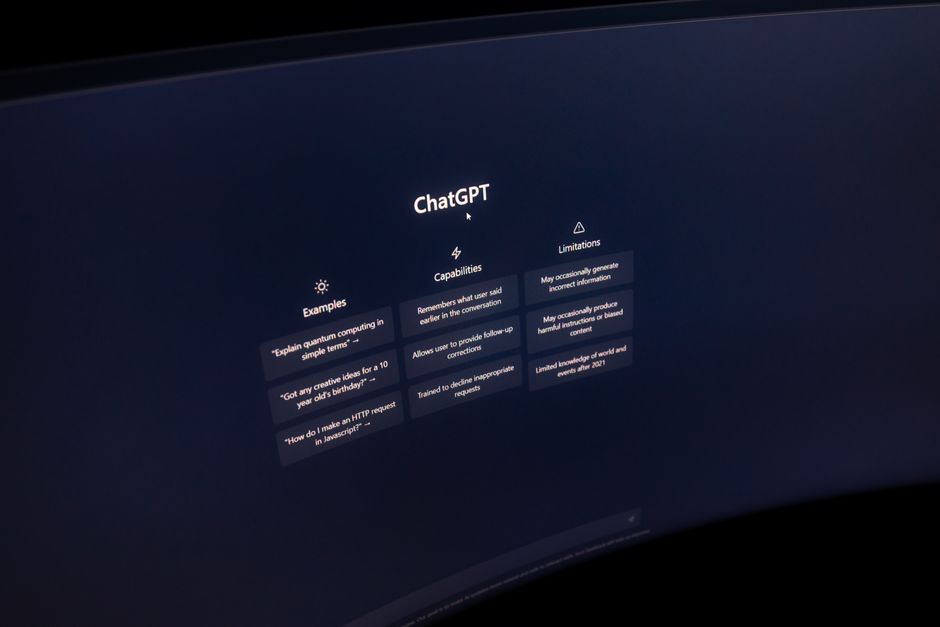
A "plain chatbot" refers to general-purpose conversational AI models (like ChatGPT, Claude, or Gemini in their standard modes) that generate responses based on their vast training data. They excel at:
- Synthesizing information: Combining knowledge from across their training corpus to answer questions.
- Creative generation: Writing, brainstorming, and generating ideas.
- Summarization: Condensing long texts or complex topics.
- General knowledge: Answering broad questions where deep accuracy or specific citations aren"t paramount.
However, their primary limitation for research is their lack of direct, real-time access to external information and their inability to reliably cite sources. When a plain chatbot "cites" something, it"s often a pattern from its training data, not a live lookup, leading to invented URLs or non-existent papers. This makes them unsuitable for tasks where every claim needs to be backed by verifiable evidence. For more on identifying these issues, consider how to spot a hallucinated citation in an AI research answer.
Perplexity AI: Designed for Source-Backed Research
Perplexity AI operates more like an AI-powered search engine than a pure chatbot. When you ask it a question, it performs a real-time web search, synthesizes the findings, and crucially, provides direct links to the sources it used to formulate its answer. This design choice makes it fundamentally different for research purposes:
- Real-time information: It queries the web for current information, reducing the risk of outdated data that can plague models trained on fixed datasets.
- Verifiable sources: Every significant claim in its answer is typically accompanied by a numbered citation linking directly to the original web page, research paper, or news article. This allows users to click through and verify the information themselves.
- Focus on factual accuracy: Its architecture prioritizes grounding answers in retrieved documents, aiming to minimize hallucinations by providing a clear audit trail.
- Follow-up questions with context: It maintains conversational context while continuing to search and cite new information as needed.
Key Differences for Research Workflows
| Feature | Plain Chatbot (e.g., ChatGPT, Claude) | Perplexity AI |
|---|---|---|
| Information Source | Internal training data (static) | Real-time web search + internal knowledge |
| Source Citation | Often absent or hallucinated | Direct, verifiable links to external sources |
| Accuracy for Facts | Variable; prone to hallucination | Higher due to grounding in real-time sources |
| Use Case for Research | Brainstorming, initial definitions, creative tasks, summarization of known facts | Fact-checking, academic research, current events, detailed investigations requiring evidence |
| Verification Effort | High (requires independent search) | Low (sources provided directly) |
| Data Freshness | Limited by training cut-off | Up-to-date (real-time web access) |

When to Choose Which Tool
Choose a Plain Chatbot When:
- You need creative ideas, not facts (e.g., brainstorming article titles, generating story prompts).
- You need a quick explanation of a concept you already have a basic understanding of, and absolute accuracy isn"t critical.
- You want to summarize a piece of text you provide, and the chatbot doesn"t need to fetch external information.
- You"re exploring broad topics and don"t immediately need to verify every statement.
Choose Perplexity AI When:
- You need to verify information: This is the primary differentiator. If you need to know *where* the information came from, Perplexity is the clear choice.
- You"re conducting academic research: For papers, reports, or presentations where citations are mandatory.
- You need current information: For fast-changing fields, news, or recent developments.
- You want to avoid hallucinations: While no AI is perfect, Perplexity"s design significantly reduces the likelihood of fabricated facts by grounding answers in retrieved documents.
- You"re exploring complex topics: Its ability to synthesize information from multiple sources and present them with citations is invaluable.
For a broader perspective on how these tools fit into the wider landscape, it"s useful to understand AI search tools vs. traditional search: when to use each.
The Practical Takeaway for Researchers
For any research question where the integrity and verifiability of sources are paramount, Perplexity AI offers a significant advantage over plain chatbots. While plain chatbots are excellent for generative tasks and quick, low-stakes information retrieval, they fall short when the demand is for evidence-backed answers. Integrating a tool like Perplexity into your research workflow means less time spent fact-checking and more confidence in the information you gather, making it an indispensable tool for anyone whose work depends on accurate, attributable knowledge.




Leave a Comment