
Understanding the core difference
In the rapidly evolving world of artificial intelligence, terms like “intelligence” and “learning” are often thrown around, sometimes interchangeably. But when we talk about what AI truly does, it’s crucial to distinguish between genuine intelligence and the powerful, yet distinct, capability of pattern recognition. At TechDecoded, we aim to demystify these concepts, helping you understand the true nature of AI’s prowess and its current limitations. 
What is intelligence? A human perspective
True intelligence, as we understand it in humans, is a multifaceted concept. It encompasses much more than just processing information. It involves:
- Reasoning and problem-solving: The ability to think logically, make inferences, and devise solutions to novel problems, even without prior examples.
- Abstract thinking: Understanding concepts that aren’t concrete, like justice, love, or the future.
- Creativity: Generating new ideas, concepts, or solutions that are original and valuable.
- Contextual understanding: Interpreting information based on the surrounding situation, cultural nuances, and unspoken rules.
- Learning and adaptation: Acquiring new knowledge and skills, and adjusting behavior based on new experiences, often with minimal data.
- Consciousness and self-awareness: While debated, these are often considered hallmarks of higher intelligence.
Human intelligence allows us to understand “why” things happen, not just “what” happens. It enables us to set goals, plan for the future, and engage in complex social interactions. 
Pattern recognition: AI’s superpower
Pattern recognition, on the other hand, is the ability to identify regularities, structures, or recurring relationships within data. This is where modern AI, particularly machine learning, truly shines. AI systems are fed vast amounts of data – images, text, numbers, sounds – and they learn to identify patterns within this data. 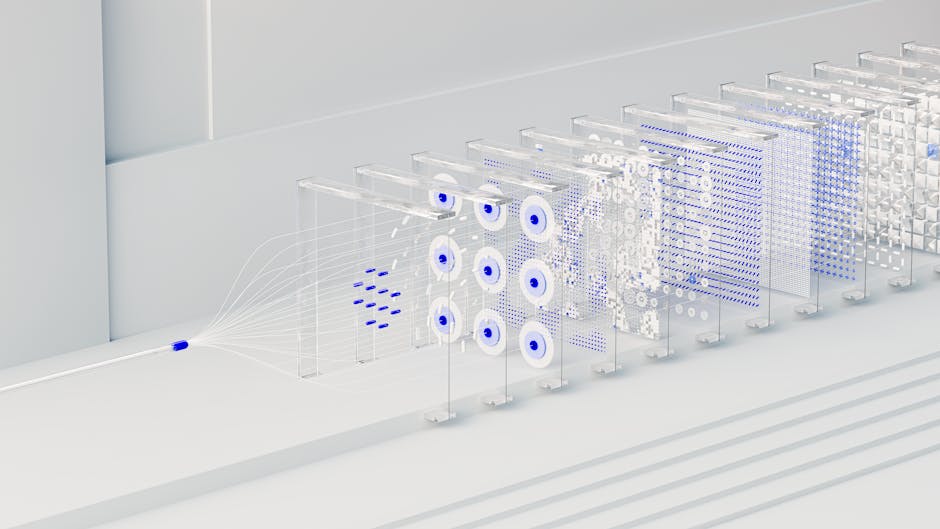
Think of it this way:
- A spam filter recognizes patterns in email content (keywords, sender addresses, formatting) to flag unwanted messages.
- Facial recognition software identifies patterns of pixels and features that correspond to a specific face.
- Recommendation engines spot patterns in your past purchases or viewing habits to suggest new items you might like.
These systems excel at finding correlations and making predictions based on what they’ve seen before. They are incredibly powerful for tasks that involve sifting through large datasets to find predictable relationships. 
Where AI stands today: Powerful pattern matching, limited intelligence
Many of the impressive feats of AI we witness today – from self-driving cars to sophisticated chatbots – are primarily driven by advanced pattern recognition. These systems can:
- Process vast amounts of data: Far more than any human ever could.
- Identify subtle patterns: Often patterns too complex or nuanced for humans to detect.
- Perform specific tasks with superhuman accuracy: Like diagnosing diseases from medical images or playing complex games.
However, their “understanding” is often superficial. An AI that identifies a cat in an image doesn’t truly understand what a cat is – its biology, its behavior, its place in the world. It merely recognizes a pattern of pixels that it has been trained to label as “cat.” If presented with a cat in an entirely novel context or a highly abstract representation, it might fail. 
This distinction is critical. While AI can mimic intelligent behavior by recognizing patterns, it often lacks the underlying comprehension, common sense, and adaptability that define true intelligence. It struggles with tasks requiring:
- Transfer learning to entirely new domains: Applying knowledge gained in one area to a completely different one without extensive retraining.
- Causal reasoning: Understanding cause and effect beyond mere correlation.
- Ethical judgment: Making decisions based on moral principles rather than just optimized outcomes.
- Genuine creativity: Generating truly novel ideas that aren’t just recombinations of existing patterns.

Bridging the gap: The future of AI
The goal of many AI researchers is to move beyond mere pattern recognition towards systems that exhibit more generalized intelligence. This involves developing AI that can:
- Learn with less data: Mimicking human efficiency in learning from a few examples.
- Understand context and common sense: Building models that incorporate a broader understanding of the world.
- Reason abstractly: Moving beyond concrete examples to grasp underlying principles.
- Explain its decisions: Providing transparent reasoning, rather than just an output.
While we are still far from achieving artificial general intelligence (AGI) that rivals human cognitive abilities across the board, understanding the current distinction between pattern recognition and intelligence is vital. It helps us appreciate AI’s incredible power for specific tasks while also recognizing its fundamental differences from human thought. 
Navigating the AI landscape with clarity
As AI continues to integrate into every aspect of our lives, a clear understanding of its capabilities and limitations becomes paramount. Recognizing that much of today’s AI excels at pattern recognition, rather than possessing human-like intelligence, allows us to:
- Set realistic expectations: Appreciate what AI can do without overestimating its current “understanding.”
- Design better AI systems: Focus research on areas where AI is currently weak, such as causal reasoning and common sense.
- Make informed decisions: Understand the implications of deploying AI in critical areas, knowing its strengths and weaknesses.
- Foster human-AI collaboration: Leverage AI for its pattern recognition prowess while relying on human intelligence for creativity, ethical judgment, and deep contextual understanding.
The journey to truly intelligent machines is ongoing. By understanding the fundamental building blocks like pattern recognition, we can better appreciate the path ahead and harness AI’s potential responsibly and effectively. 



Leave a Comment