

The fundamental building blocks of AI
At its heart, AI isn’t magic; it’s a sophisticated system built on two primary components: data and algorithms.
Data: The fuel for artificial intelligence
Think of data as the food AI consumes. Just like humans learn from experiences, AI systems learn from vast amounts of information. This data can be anything from images, text, audio, and videos to numerical tables. The quality and quantity of this data are crucial – more diverse and accurate data generally leads to more capable AI.
- Labeled data: Data that has been tagged or categorized, telling the AI what it represents (e.g., an image labeled “cat”).
- Unlabeled data: Raw data without specific tags, which AI can analyze to find patterns on its own.

Algorithms: The recipes for learning
If data is the fuel, algorithms are the engines. An algorithm is essentially a set of rules or instructions that an AI system follows to process data, identify patterns, make decisions, or solve problems. These algorithms are designed by humans (for now!) and dictate how the AI will learn and operate.

How artificial intelligence learns: The training process
Unlike traditional software that follows explicit, pre-programmed instructions for every scenario, AI systems, particularly those using machine learning, learn from data. This learning process is often called “training.”
Machine learning: Learning from experience
Machine learning (ML) is a subset of AI that enables systems to learn from data without being explicitly programmed. Instead of a programmer writing code for every possible input and output, the ML model is fed data and learns to identify relationships and make predictions or decisions based on that data.

Training the model: Iteration and refinement
During training, the AI model is exposed to a large dataset. It processes this data, makes predictions, and then compares its predictions to the actual outcomes (if available). Based on the difference between its prediction and the reality, the model adjusts its internal parameters to improve its accuracy. This iterative process continues until the model reaches an acceptable level of performance.
For example, if you’re training an AI to recognize cats, you’d show it thousands of images of cats and non-cats. Initially, it might misidentify a dog as a cat. But with each correction, it refines its understanding of what constitutes a “cat.”

Different approaches to AI learning
There are several primary paradigms through which AI systems learn, each suited for different types of problems.
- Supervised learning: This is the most common type. The AI learns from labeled data, where both the input and the desired output are provided. It’s like learning with a teacher who provides correct answers. Examples include image classification (identifying objects in photos) and spam detection.
- Unsupervised learning: Here, the AI works with unlabeled data, trying to find hidden patterns or structures on its own. There’s no “teacher” providing correct answers. It’s used for tasks like customer segmentation or anomaly detection.
- Reinforcement learning: This approach involves an AI agent learning by interacting with an environment. It receives rewards for desirable actions and penalties for undesirable ones, much like training a pet. It’s often used in robotics, game playing (like AlphaGo), and autonomous systems.
Neural networks and the power of deep learning
When people talk about the impressive breakthroughs in AI today, they are often referring to deep learning, a specialized form of machine learning that uses neural networks.
Mimicking the human brain
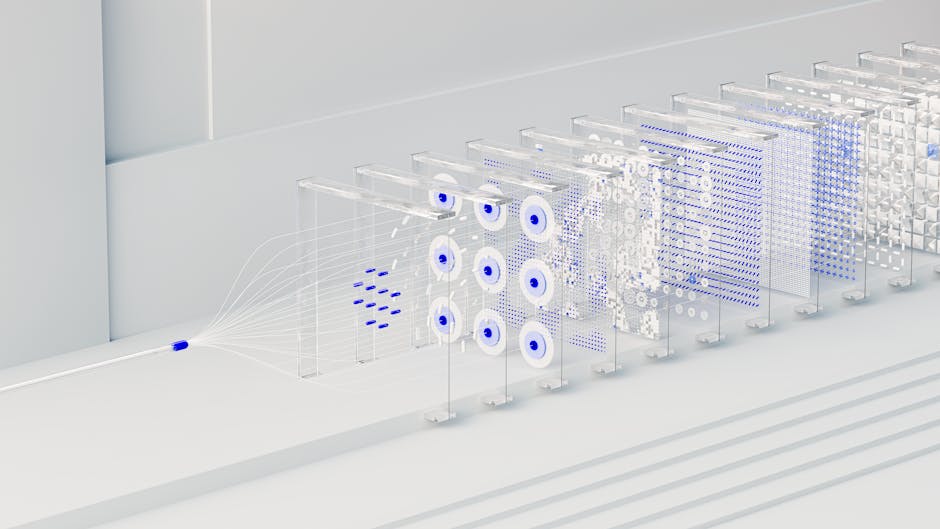
Artificial neural networks (ANNs) are inspired by the structure and function of the human brain. They consist of interconnected “neurons” organized in layers. Each neuron processes information and passes it on to the next layer. The “deep” in deep learning refers to the presence of many hidden layers between the input and output layers, allowing the network to learn increasingly complex and abstract representations of data.

Unlocking complex patterns
Deep learning models excel at tasks that involve large, unstructured datasets, such as image recognition, natural language processing, and speech recognition. Their multi-layered structure allows them to automatically extract features from raw data, eliminating the need for manual feature engineering that was common in older ML techniques.

AI in action: Real-world applications
Understanding how AI works makes its real-world applications even more fascinating. Here are a few examples:
- Personalized recommendations: Streaming services and e-commerce sites use AI to analyze your past behavior and suggest content or products you might like.

- Natural language processing (NLP): AI powers chatbots, language translation tools, and voice assistants by understanding and generating human language.

- Computer vision: Self-driving cars, facial recognition, and medical image analysis rely on AI to “see” and interpret visual information.

- Predictive analytics: Businesses use AI to forecast trends, predict equipment failures, or identify potential fraud.

Your practical path to understanding AI
Demystifying how AI works isn’t just an academic exercise; it’s a practical necessity in our increasingly tech-driven world. By grasping the core concepts of data, algorithms, machine learning, and neural networks, you gain a clearer perspective on both the capabilities and limitations of artificial intelligence.
This foundational knowledge empowers you to:
- Evaluate AI tools more effectively: Understand what makes one AI solution better suited for a task than another.
- Identify ethical considerations: Recognize potential biases in data or algorithms.
- Innovate with confidence: See opportunities to apply AI in your own work or life.
The journey into AI is continuous, but with these building blocks, you’re well-equipped to navigate its exciting evolution. Keep exploring, keep questioning, and keep learning with TechDecoded.


Leave a Comment