

Taming the information deluge with AI
In today’s fast-paced digital world, we’re constantly bombarded with information. From in-depth research papers to lengthy news analyses and comprehensive blog posts, the sheer volume of text can be overwhelming. Reading every word of every article simply isn’t feasible for most of us. This is where Artificial Intelligence steps in as a powerful ally, transforming how we consume and understand information.
AI summarization tools are designed to distill lengthy texts into concise, digestible summaries, saving you precious time and helping you grasp the core concepts without getting lost in the details. Whether you’re a student, a professional, or just someone trying to keep up with the news, learning to leverage AI for summarization is a game-changer. 
Why AI summarization is a modern essential
The benefits of using AI to summarize articles extend far beyond just saving time. They touch upon productivity, learning, and even decision-making:
- Boosted productivity: Quickly get the gist of multiple articles, allowing you to cover more ground in less time.
- Enhanced learning: Focus on key takeaways, making it easier to understand complex topics and retain information.
- Better decision-making: Rapidly assess the core arguments and data points from various sources before forming an opinion or making a choice.
- Overcome information overload: Reduce mental fatigue by cutting through the noise and focusing only on what’s essential.
- Accessibility: Make long, dense texts more approachable for everyone, regardless of reading speed or attention span.
How AI understands and summarizes text
At its core, AI summarization relies on advanced Natural Language Processing (NLP) techniques. There are generally two main approaches:
- Extractive summarization: This method identifies and extracts the most important sentences or phrases directly from the original text to form a summary. It’s like highlighting the key parts of an article.
- Abstractive summarization: More sophisticated, this approach generates new sentences and phrases that convey the meaning of the original text, much like a human would rephrase content in their own words. It requires a deeper understanding of the text’s context and nuance.
Modern AI models, especially large language models (LLMs) like those powering ChatGPT, often combine elements of both, creating summaries that are both accurate and coherent. 
Top AI tools for summarizing articles
The market is rich with tools designed for AI summarization, ranging from dedicated services to versatile AI chatbots. Here are some popular options:
- Dedicated summarization tools: Websites and apps like QuillBot, TLDR This, SummarizeBot, and SMMRY are built specifically for text summarization. They often offer various summary lengths and styles.
- AI chatbots (LLMs): Tools like OpenAI’s ChatGPT, Google’s Gemini, and Anthropic’s Claude are incredibly versatile. You can paste an article or provide a link and ask the AI to summarize it, specifying the length, tone, or even target audience.
- Browser extensions: Many extensions (e.g., TLDR This, Summarize) can summarize web pages directly in your browser with a single click, making it seamless to get quick insights.
- Productivity suites with AI: Platforms like Notion AI, Microsoft Edge’s Copilot, and others are integrating summarization capabilities directly into their features, allowing you to summarize documents or web content within your workflow.
Each tool has its strengths, so experimenting with a few can help you find the best fit for your needs. 
A step-by-step guide to AI summarization
Using an AI tool to summarize an article is generally straightforward. Here’s a common workflow:
-
Choose your AI tool
Select the tool that best suits your task. For a quick web page summary, a browser extension might be ideal. For a more nuanced summary of a complex document, a powerful LLM like ChatGPT or Gemini might be better.
-
Input the article text or link
Most tools allow you to either paste the entire article text directly into a designated box or provide a URL to the article. If using an LLM, you can simply say, “Summarize this article: [paste text/link here].”

-
Specify summary requirements (if applicable)
Some tools offer options to customize the summary:
- Length: Choose between a short, medium, or detailed summary.
- Keywords: Ask the AI to focus on specific keywords or themes.
- Format: Request bullet points, a paragraph, or even a specific tone.
With LLMs, your prompt is key. For example: “Summarize this article in three bullet points, focusing on the main arguments for AI ethics.”
-
Generate and review the summary
Once you’ve provided the input and any instructions, the AI will process the text and generate the summary. Take a moment to read through it.

-
Refine and verify
AI summaries are powerful, but they aren’t always perfect. Always review the summary for accuracy, clarity, and completeness. If using an LLM, you can ask follow-up questions or request revisions: “Can you expand on point two?” or “Is there any mention of [specific topic] in the original text?”

Tips for effective AI summarization
To get the most out of AI summarization, keep these best practices in mind:
- Understand the context: Before summarizing, have a basic idea of what the article is about. This helps you evaluate the summary’s quality.
- Verify critical information: For academic work, news reporting, or crucial decision-making, always cross-reference the AI summary with the original source for key facts, figures, and quotes.
- Experiment with different tools: Some tools might be better at summarizing technical papers, while others excel with news articles. Find what works best for different types of content.
- Master your prompts (for LLMs): The clearer and more specific your prompt, the better the summary. Ask for specific lengths, formats, or even perspectives (e.g., “Summarize this for a beginner”).
- Use it as a starting point: Think of AI summaries as a powerful first pass. They help you decide if an article is worth a deeper read, rather than replacing critical engagement entirely.
Navigating limitations and ethical considerations
While incredibly useful, AI summarization isn’t without its caveats:
- Accuracy and hallucination: Especially with abstractive summarization, AI can sometimes misinterpret context or even ‘hallucinate’ information that isn’t in the original text.
- Bias: The AI models are trained on vast datasets, which can contain inherent biases. These biases might inadvertently be reflected in the summaries, emphasizing certain viewpoints over others.
- Loss of nuance: Summaries, by nature, condense information. This can sometimes lead to the loss of subtle arguments, specific examples, or the author’s unique voice.
- Over-reliance: Relying solely on AI summaries without ever engaging with original texts can hinder critical thinking and deep understanding.
Always approach AI summaries with a critical eye, especially when dealing with sensitive or complex topics. 
A smarter way to consume information
AI summarization is more than just a technological gimmick; it’s a fundamental shift in how we interact with information. It empowers us to navigate the vast digital landscape more efficiently, making knowledge more accessible and manageable. By understanding how these tools work, applying best practices, and being mindful of their limitations, you can transform your reading habits and unlock new levels of productivity and understanding.
Embrace AI as your intelligent assistant, allowing you to focus your valuable time and energy on the deeper analysis and creative thinking that only humans can provide. The future of informed decision-making and continuous learning is here, and it’s summarized by AI. 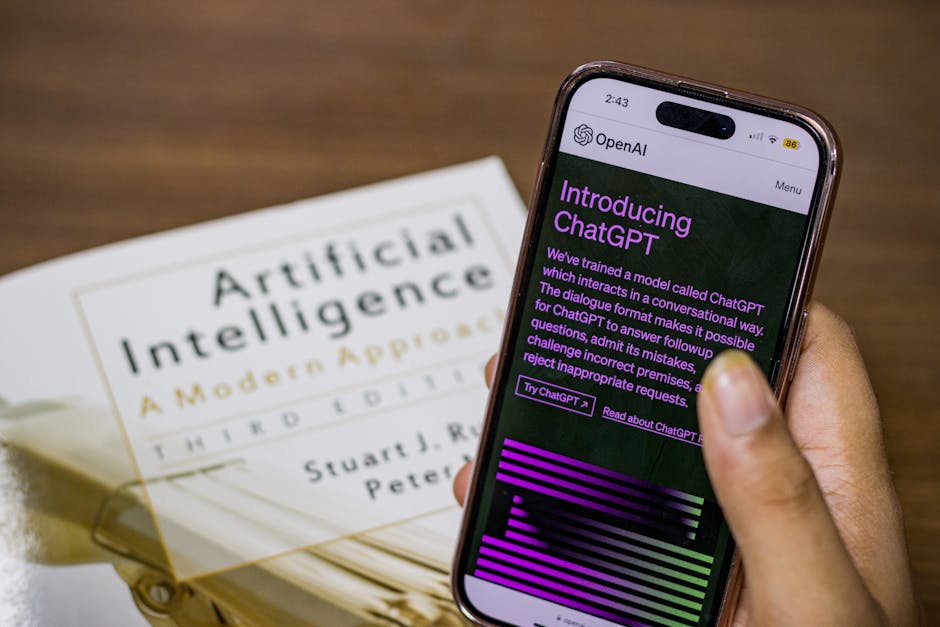
Leave a Comment